POeT SHOTS - 'NOVEMBER SURF' by ROBINSON JEFFERS

POeT SHOTS is a monthly series published on the first Monday of the month. It features work by established writers followed by commentary and insight by Ray Greenblatt.

POeT SHOTS #11, Series C

NOVEMBER SURF

Some lucky day each November great waves awake and are drawn
Like smoking mountains bright from the west
And come and cover the cliff with white violent cleanness: then suddenly
The old granite forgets half a year’s filth:
The orange-peel, eggshells, pieces of clothing, the clots
Of dung in the corners of the rock, and used
Sheaths that make light love safe in the evenings: all the droppings of the summer
Idlers washed off in a winter ecstasy:
I think this cumbered continent envies its cliff then . . . But all seasons
The earth, in her childlike prophetic sleep,
Keeps dreaming of the bath of a storm that prepares up the long coast
Of the future to scour more than her sea-lines:
The cities gone down, the people fewer and the hawks more numerous,
The rivers mouth to source pure; when the two-footed
Mammal, being someways one of the nobler animals, regains

California coast, early 20th century. High surf washes the sea cliffs. “great waves awake and are drawn like smoking mountains”…”cover the cliff with white violent cleanness”…”old granite forgets half a year’s filth”…Idlers washed off in a winter ecstasy”…”this cumbered continent envies its cliff.”

greenblatt.jpeg

Ray Greenblatt has been a poet for forty years and an English teacher longer than that. He was an editor of General Eclectic, a board member of the Philadelphia Writers Conference, and is presently on the staff of the Schuylkill Valley Journal. He has won the Full Moon Poetry Contest, the Mad Poets Annual Contest, and twice won the Anthony Byrne Annual Contest for Irish Poetry sponsored by The Irish Edition. His poetry has been translated into Gaelic, Polish, Greek and Japanese.

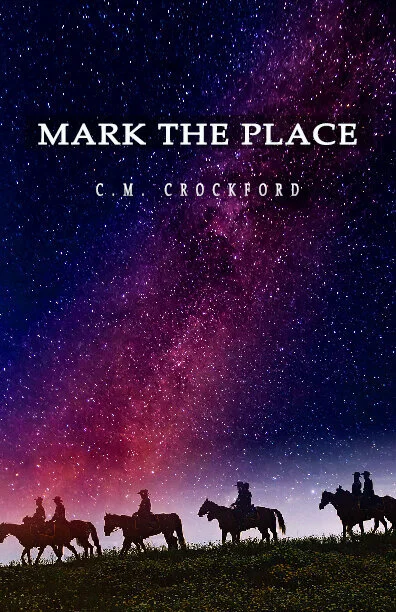
Review of C.M. Crockford’s Mark the Place

crockford.jpg

Mark The Place

Thirty West Publishing House

$11.99 

You can buy the book here.


“The poem “Declaration” reminds me of what “Song of Myself” would be like if it were written by a millennial.”


Three poems in C.M. Crockford’s new chapbook Mark The Place took me immediately to Walt Whitman’s “Song of Myself” in Leaves of Grass:

I celebrate myself, and sing myself,
And what I assume you shall assume,
For every atom belonging to me as good belongs to you.

Whereas Whitman’s poem is generally positive throughout, Crockford’s poetry balances the scales between wonderment and doom. In the opening poem “Declaration,” the poet announces his presence to the world: “I howled out my love on the rooftop / begging all to hear the words.”

Even though the poet is “howling” from the rooftop, there is still some hesitation as the words come “stumbling from his mouth.” Crockford writes that he cannot “catch his breath” yet the “exaltation” he feels “crashed / and died with such a beautiful smile / next to fear”.

The joie de vivre in “Declaration” is tinged with a somber realization that no one out there really cares. The poet looks to the moon for a sign, but “[i]t did not speak.” And in the end, he surrenders to a worldly existential angst, saying of the moon’s mute response: “That was enough.” 

The poem “Battle Cry,” which appears near the end of the chapbook, harkens back to “Declaration” in both its intensity and its use of the word howl in its opening lines: “Born howling / I claw through empire / carved from the remains / of a lost Kingdom.”

Crockford is 28 years old, and this poem, along with “Declaration,” reminds me of what “Song of Myself” would be like if it were written by a millennial. The poet states that despite the challenges of life — “the struggle for breath / the burst of pain / the raw affliction of the heart/” — he will choose “to fight again”.

Millennials are taking on a lot of fear and anxiety about the plight of the world and what might be in store for them as they age: the environment, social security, Medicare, etc. “If you’re paying attention at all, especially in America, you’re pretty scared,” Crockford told me in an interview.

In the third poem that has a hint of Whitman, titled “Birthright,” the poet again wants to assert his voice, or more accurately, his right to have a voice. I again think of Whitman, tinged with Jean-Paul Sartre, as Crockford says: “Here I stand / a halting voice. /Senses awake / in disorder.”

Part of Crockford’s “disorder” no doubt is due to his being on the autism spectrum, a fact he states in his biography. In the poem “Sensory,” he describes for us what it’s like inside his brain:

The clapping hands
(cannon fire)
thousands of them
battering his skull—
sharp sickening shocks—

Year ago, I read a book by Temple Grandin, PhD, the grande dame of autism, and she described her inability to control sensory input as like having a thousand locomotives come at you at once. I would think that Crockford’s interesting stanza structure and spacing of words has something to do with how he hears the language.

Here’s an example of word spacing from “Hush falls…”

but not the birds    no.
the nuthatches    chickadees
who    fly    flock    feed
among the dreaming

Crockford’s skills of poetic observation are everywhere. In the poem “Run,” he uses the song “Born to Run” by Bruce Springsteen as a springboard to ask where should “trumps” like him run: “the ones who can’t find a job, can’t drive / bred for the age of hate and desperation?”

In “Agonizing Love,” the poet describes the pain he feels at his inability to help those less fortunate than him.

The raw faces at subway stations
whose hands I want to hold while
asking, “are you alright?”

Crockford was born and raised in New Hampshire (“I’m always aware of nature.”) He’s lived on the West Coast, and has been in Philadelphia since 2017. He makes his living as a writer. This is his second published chapbook, and his poems have appeared in several journals. He cohosts a podcast, and writes pop culture criticism and fiction.

Some of the poets who have influenced him include William Blake, e.e. cummings, Edgar Allan Poe, Sharon Olds, Whitman, William Butler Yeats, John Keats, and Pablo Neruda.

Crockford begins the chapbook with a quote from Blake’s “Jerusalem”:

I must Create a System, or be enslave’d by another Man’s
I will not Reason & Compare: my business is to Create

He ends the chapbook with a poem influenced by Blake called “Summer Rising.” This poem, in four parts, recounts in lovely language different aspects of summer. It also contains my favorite phrase: joy free of hesitation. It’s an ecstatic, transcendental moment. Crockford remembers diving off cliffs in New Hampshire as a boy. “years later /returned / he wonders if God / was there / disguised as / the cliffs / the streams / the Green / or if it wasn’t just    joy /     free of hesitation.

Mark The Place contains the poetic observations of a man who is restless, discontent, and searching for answers. We get a sense that he has found some peace of mind in the poem “Standard Man,” where Crockford lists all the ways he’s begun to settle down. We can only hope that he continues to offer us his unique interpretation of the world, wherever his restlessness may take him.


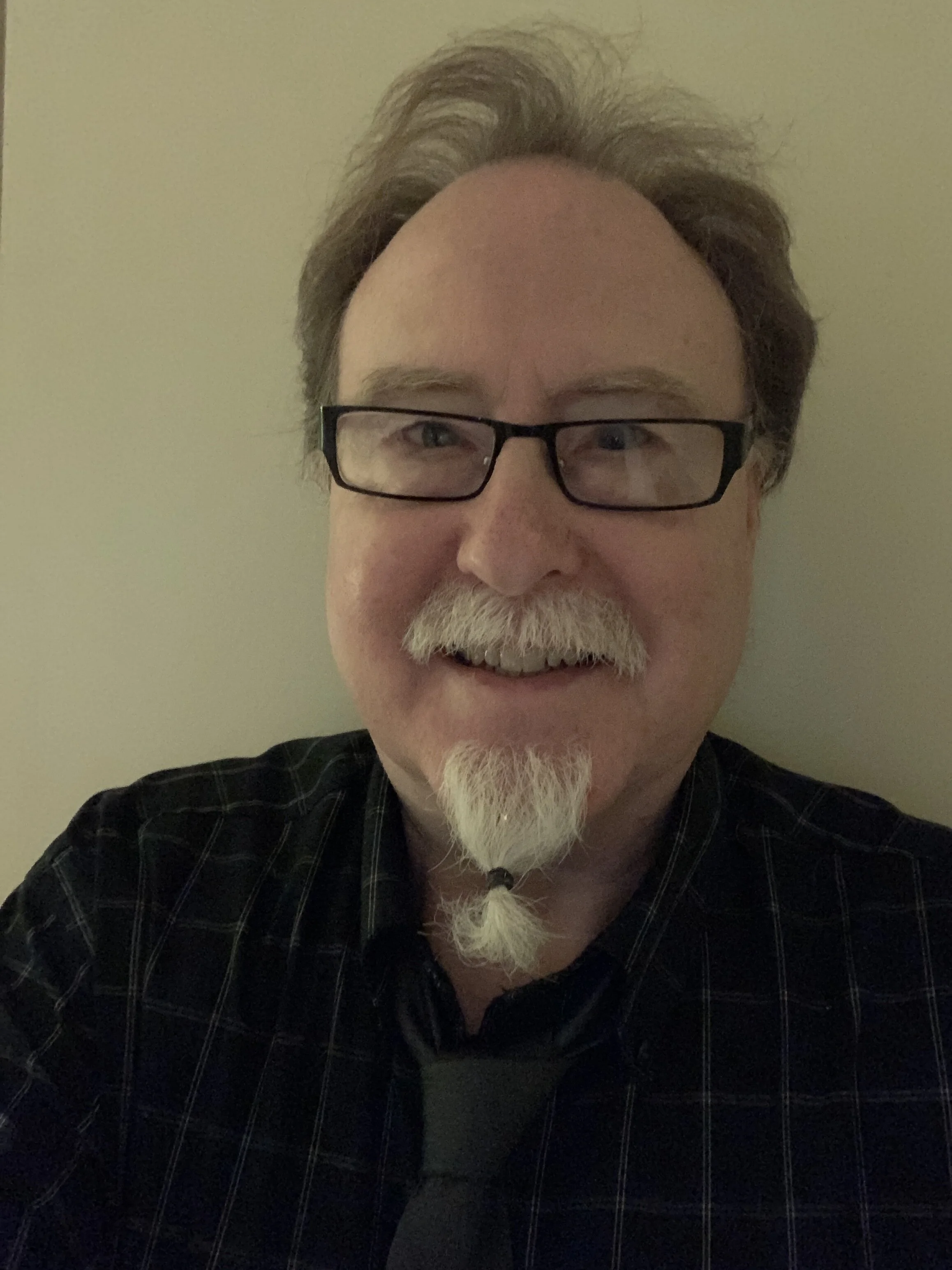
Chris bio image 2.JPG

Chris Kaiser’s poetry has been published in Eastern Iowa Review, Better Than Starbucks, and The Scriblerus. It appeared in Action Moves People United, a music and spoken word project partnered with the United Nations, as well as in the DaVinci Art Alliance’s Artist, Reader, Writer exhibit, which pairs visual art with the written word. He’s won awards for journalism and erotic writing, holds an MA in theatre, and lives in suburban Philadelphia.

Local Lyrics featuring Belinda Manning

Local Lyrics hosted by John Wojtowicz appears on the 3rd Monday of each month. In it, John features the work and musings of a local poet.


“I wrote my first poem for a high school English class. That was almost 55 years ago. It was also during a period of unrest. It was the first time I actually heard myself. Writing for me is a spiritual practice. It grounds me. It allows me access.”

Belinda Manning

Finding Our Way

It is the  elders who understand
the correlation between the life’s lyrical melody
and the beat of the drum that calls us so perfectly
into existence. 

Almost effortlessly they walk to the front
of the battlefield of justice
…alone...
Refusing to beckon us to follow. 

But the children of tomorrow
Have heard the melody and
felt the beat of the drum
and been bathed in truth. 

And they take their place.
Knowing the way forward
Because it belongs to them
It is in that space… in that moment

Where the past bows to the present moment
laying truth on the ground;
the evolution will begin
and our hearts will be changed forever.

finding our way.png

Q and A

How would you describe your poetic aesthetic?

My writing is a part of my spiritual practice, so there is a spiritual element to it.

Do you find the place you live reflected in your work?

The place that I currently live is where I have lived for at least 50 non-consecutive years of my life. So, more than any other place, it rests in my bones. Even when I am not intentional about including some physical element in my work, it finds its way there. For me, every place that I allow myself to be fully present informs who I am and how I express myself and interact with the world. My relationship with my physical environment is as important as the relationships I have with individuals. Although I have lived briefly in a number of places, they don’t hold the same imprint as this place I call home. Even where I travel in my imagination and dreams, they usually have some of the same energetic similarities with my current environment, and when they don’t, I know it is an experience I will have—soon. The other thing I should mention is that having continuity of place gives me a vantage point from which to observe the dynamics of change and how communities respond to it. How things come together and fall apart only to re-form. There is a sense of art to it all.

In addition to poetry, I enjoy the art of storytelling. As a result, some of my poetry lends itself more to spoken word. For me where I live holds my origin story. It served as home to my grandparents—where my great grandparents would visit—and my parents. So there is generational memory that my body holds. When I am most fortunate it will reveal itself and allow me to place it on paper, or in some other form of art.


Is the current climate of our nation impacting your writing? 

During this period of global unrest, I find myself retooling for the road ahead. I constantly question: What are the things that nourish me? What keeps me whole and helps me to operate at my higher self? What are those life-giving skills I need to practice and how do I give them personal definition so that they have meaning for me? I wrote my first poem for a high school English class. That was almost 55 years ago. It was also during a period of unrest. It was the first time I actually heard myself. Writing for me is a spiritual practice. It grounds me. It allows me access. Over the past few months my writing has defied the “butt in the seat” discipline required to produce a product. It sometimes has no intention other than to appear on a piece of paper. There are thousands of them, and notebooks too. One day I may take the time to go through and organize them. They are in piles all around my house. Everywhere. The value of writing most of it is not to produce anything, but to just put the words on paper where they can breathe, so I can breathe. Words that I need to see, written in a way that I can hear myself, unobstructed by the chaos and noise of the world surrounding me.

You are both a practitioner and wonderful instructor of Yin Yoga. How does your practice influence or flow into your poetry?

As I said earlier, writing for me is a spiritual practice, Yin and contemplation are two other spiritual practices for me. Many of my Yin classes are a manifestation of what comes up for me in contemplation. Remember those notebooks and pieces of paper I talked about laying around my house? Some of them become points of contemplation and then find their way into the poetry of my classes. They offer a point of focus for me, my students and our practice together.  For me there exists an agreement of mutualism between the three practices.

Covid-19 has created a challenge for taking part in the arts but you have really embraced the virtual platforms available. What was this transition like for you?

This challenge has not been majorly difficult. After I allowed myself permission to grieve what I had lost and was losing, I began to discover what I had gained. I lost access to much of the human touch and socialization that I live for and, I am learning to lean in to other ways of developing and maintaining relationships and intimacy with other human beings. One major gain for me has been access. I have attended classes up and down the West Coast and places in between. I have attended conferences that would never have been accessible to me had it not been for the virtual world. I have seen performances of Opera at the Met and the Jacob’s Pillow Dance Festival without leaving my home, which at times has presented physical hardships. I was also able to participate in 48 Blocks AC, attend many of the offerings and actually taught a class in Memory Doll Making. I intend to expand my use of the technology by offering free Zoom classes in Yoga, Doll Making and whatever else I am able to come up with. I am also going to reactivate my Blogs. I actually discovered that these platforms were designed for people like me: curious, social, unfinished, physically challenged seniors who recognize they have more to give and a responsibility to give it away. 

Where can we find more of your work or participate in your practice?

Currently, I teach Yin Yoga live on Monday evenings at 7pm on the Leadership Studio’s Facebook Page.

Instagram: @belindamanning6355

Blogs: Phoenix Rising & Conversations... with Dad

Click bold text for links!)

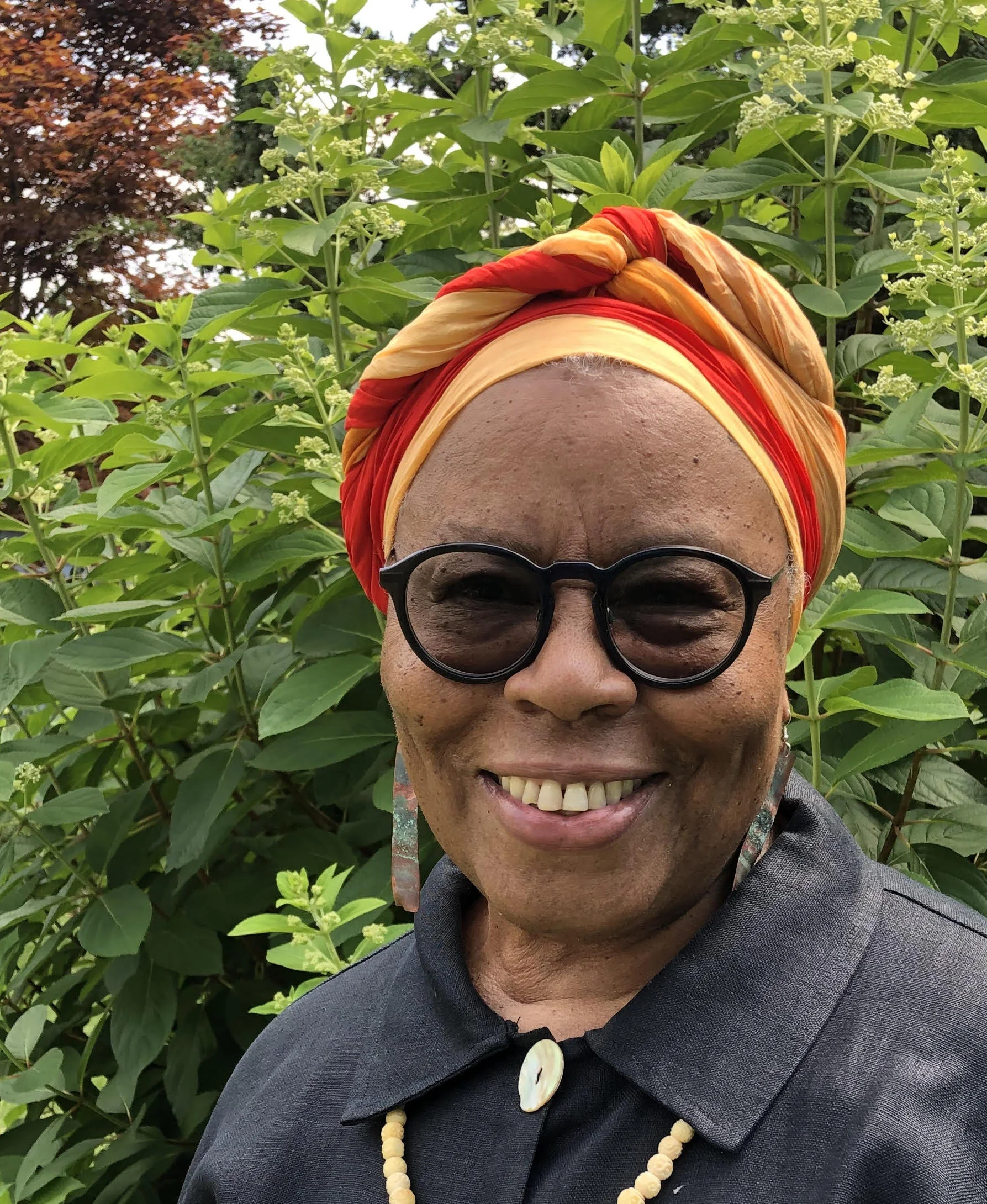
belinda manning.jpg

I spent most of my “working” life in the corporate world and as a volunteer in the non-profit sector. After my retirement, I found myself bathing in the healing power of art. In addition to writing, I have worked with hot glass, fusing and lampwork.  I have cycled my way through the art of bookmaking, polymer clay and doll making.  Both my photographic and mixed media arts have received awards.—Belinda Manning


wojto.jpg

Catfish” John Wojtowicz grew up working on his family’s azalea and rhododendron nursery in the backwoods of what Ginsberg dubbed “nowhere Zen New Jersey.” Currently, he serves his community as a licensed social worker and adjunct professor.  He has been featured in the Philadelphia based Moonstone Poetry series, West-Chester based Livin’ on Luck series, and Rowan University’s Writer’s Roundtable on 89.7 WGLS-FM. Catfish John has been nominated 3x for the Pushcart Prize. He has been a workshop facilitator for Stockton University’s Tour of Poetry at the Otto Bruyns Public Library of Northfield and will be facilitating a haiku workshop at Beardfest Arts & Music Festival at the end of August. Recent publications include: Jelly Bucket, Tule Review, The Patterson Literary Review, Glassworks, Driftwood, Constellations, The Poeming Pigeon, and Schuylkill Valley Journal. Find out more at: www.catfishjohnpoetry.com

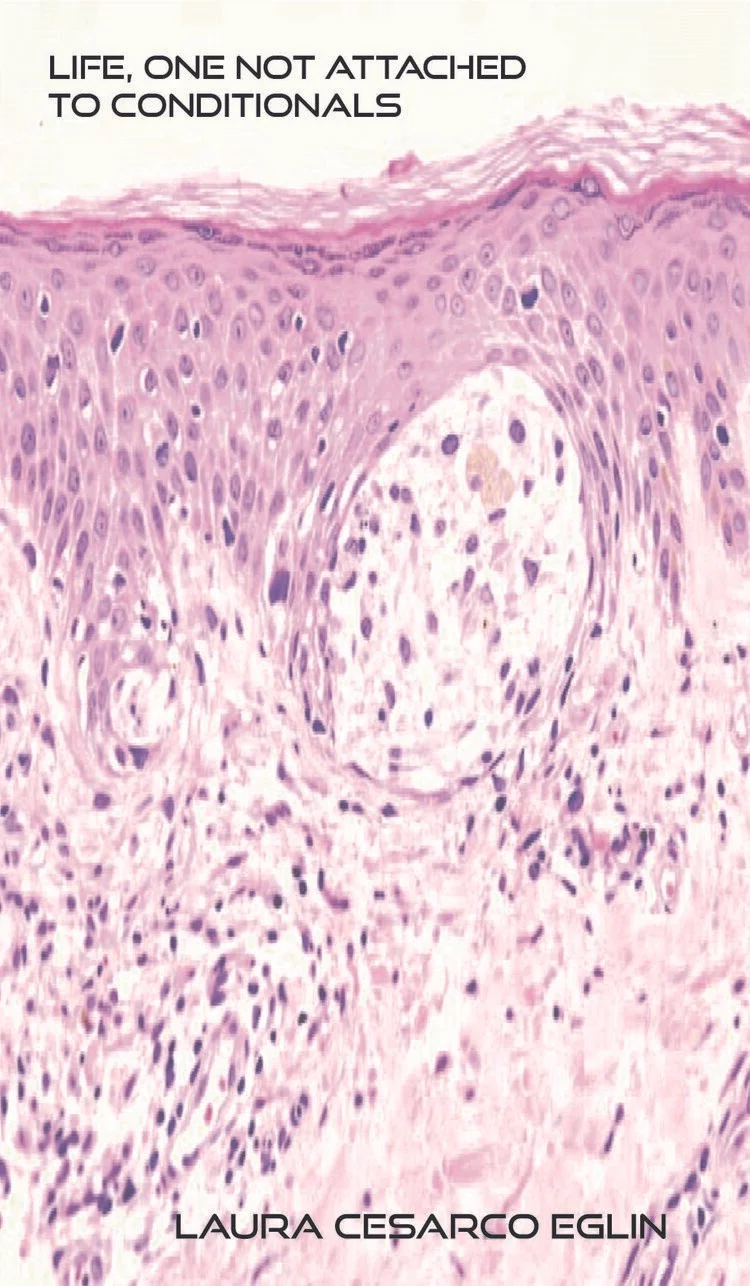
Review of Laura Cesarco Eglin's Life, One Not Attached to Conditionals

Lifeonenotattachedtoconditionals_Cover_Final.jpg

Life, One Not Attached to Conditionals

Thirty West Publishing House

$11.99

You can buy the book here.

Reviewed by Brooke Palma


In Life, One Not Attached to Conditionals, Laura Cesarco Eglin shows the reader that tragedy can give birth to beauty. This moving testimony chronicles Eglin’s multiple bouts of melanoma through impactful poems. Each poem confronts the messy beauty of life and explores the ways that the sublime is connected to the body itself.

The connection between language and the experiences of the body is a theme that echoes throughout this chapbook. The second poem in this collection, “Melanoma’s Lines” masterfully elaborates on this connection. As Eglin writes in this poem’s final stanza, 

One scar, then another;
that's two lines already:
a couplet written in five months,
a couplet that promises
to be the beginning of a lifetime
of poetry.

Eglin uses her experience of illness to go beyond the merely emotional. Her illness drives her poetry, and more so than that, through this book, it becomes poetry. In the hands of a lesser writer, this could become a trite attempt to draw sympathy from the reader, but Eglin’s writing is raw and visceral. She does not shy away from the hard truths of the experience, and that is what makes these poems so beautiful and so compelling. She lets us in to the difficult truths about “a tongue’s job in poetry, letting the body participate” and to the fact that “[t]here’s so much in being silent” …to “touch the stitches with your hands.” By facing the pain head-on without anesthetic for herself or us as readers, she transforms the negative experience of chronic illness into something brutal and beautiful.

Eglin not only captures the physical aspects of illness, but she writes honestly of the emotional difficulties as well, specifically the anxiety of waiting and uncertainty. In “Journeys,” she describes “the anxiety of about to.” She tells us that melanoma has a similar rhythm to the subway’s impending arrival described in this poem: … “biopsy, surgery, biopsy, surgery, biopsy, surgery. It’s always coming — always somewhere …” In “Perspective,” she writes of a past when she imagined “cancer as a broken promise.” The poem that perhaps best captures this uncertainty is “Waiting for Biopsy Results.” She explains,

…Murmur is what has been unfolding
already existing by the time I notice it,
already moving towards ungraspable, already
inside and growing.
Murmur is not quite late,
but almost.  Murmur is a diagnosis
away from surgery, away from being
vigilant all the time…

The sound pattern in the repetition of the word “murmur” mirrors the whispered worry, the constant anxiety brewing just below the surface. In this poem, Elgin brings us along to wait and worry alongside her.

Laura Cesarco Eglin’s Life, One Not Attached to Conditionals, births beauty out of tragedy and poetry out of struggle. This chapbook explores the body’s connection to language. The hard-hitting images show the difficult emotional and physical impacts of the author’s melanoma diagnosis; this in turn helps disrupt our certainty in everyday life. At the same time, these same images remind us that there is poetry in suffering, and Eglin works to turn the ugly into the beautiful.  

Brooke Palma headshot.jpg

Brooke Palma grew up in Philadelphia and currently lives in West Chester, Pennsylvania. Many of her poems focus on the connections between culture and identity and finding beauty in the everyday. Her work has been published in The Mad Poets’ Review, Moonstone Arts, Toho Journal, and E-Verse Radio (online), and work is forthcoming in Unbearables: A Global Anthology (to be released on November 2, 2020).  Her chapbook, Conversations Unfinished, was published by Moonstone Press in August 2019. She hosts the Livin’ on Luck Poetry Series at Barnaby’s West Chester.  

In Their Words - an Interview with Mike Cohen

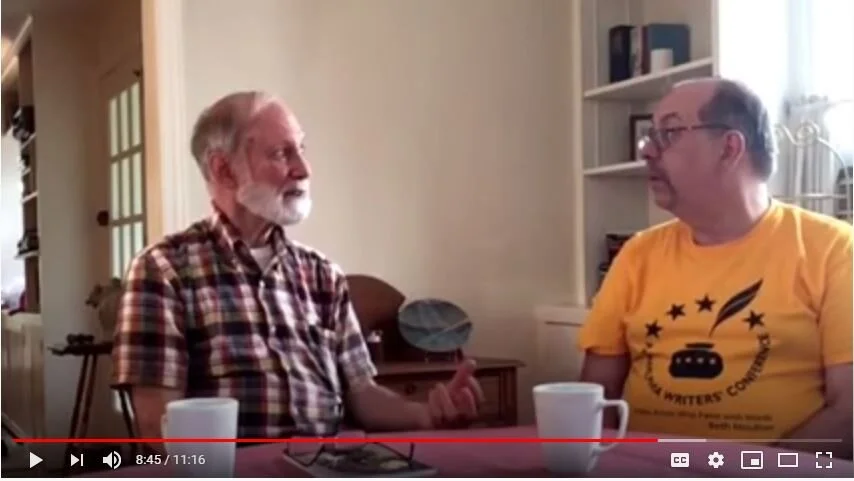
A few months back, we featured the interview where Mike Cohen interviewed his co-host, Steve Delia. Today, we feature the time where Steve returns the favor and interviews Mike. in a heartfelt interview, they discuss poetry and what it means to be a poet, as well as many other things!

Click the picture to view the interview.

For the full interview, as well as others, go to Mike Cohen’s Youtube Channel.


Delia and Cohen.jpg

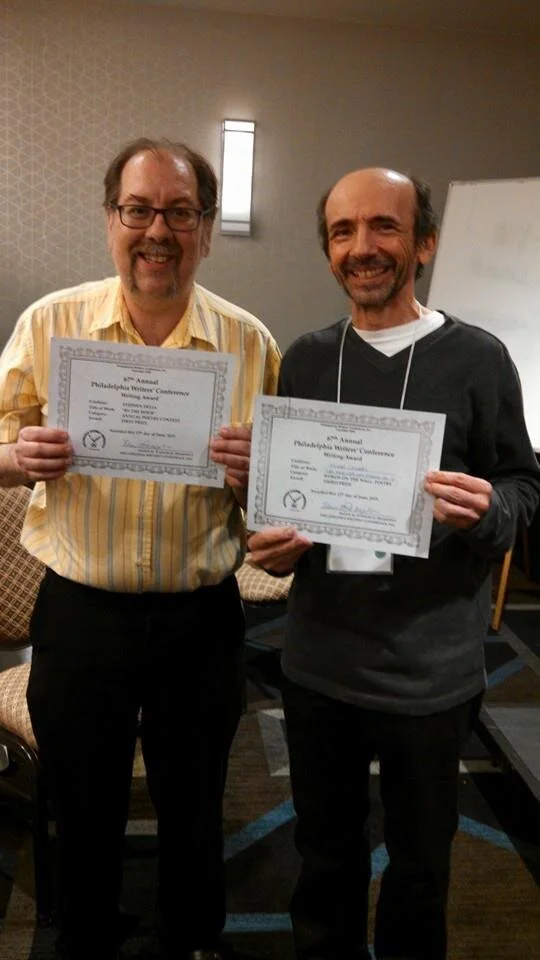
Steve Delia and Mike Cohen have worked collaboratively and independently as poets and supporters of the arts in the Greater Philadelphia area. Mike Cohen helps to run the Poetry Aloud and Alive series at the Big Blue Marble Bookstore, and has had his fingers in many poetic ventures over the years. Steve Delia is the author of 6 chapbooks of poetry, and has read in a variety of venues, including the Philadelphia Writers Conference and on WXPN. Steve and Mike have also appeared throughout the Philadelphia area as the Dueling Poets.

Review of Josh Martin's Vapor

vapor crop.png

Vapor

Toho Press

$9.99

You can buy the book here.

Reviewed by Phil Dykhouse

Pain is universal. Despite its harrowing nature, pain is meant to protect us, to teach us, to heal us even. Josh Martin’s Vapor unveils a brutal yet beautiful portrait of the author trying to come to grips with overwhelming pain and its effects. The poetry within this chapbook drifts somewhere between the surreal and the all too real; a dreamscape inhabited by unfulfilled expectations and heartbreak. Throughout the book’s 19 poems, we find Martin confronting these themes head-on as he reflects on precise moments that caused so much distress. There is no denying that there is an underlying melancholy to Martin’s ruminations, yet he does not simply dwell sorrowfully about the state he finds himself in. Rather, Martin’s work seeks to understand how and why he got to this painful state. The theme at the heart of Vapor is Martin's attempt to learn a lesson that his pain was unable to teach him. 

Martin’s steady hand and lyrical gifts have crafted a fascinating narration for his journey. One of Martin’s most creative techniques is connecting the emotions of the poems to basic elements and actions of our physical world. He uses this to not only distort those emotions, but to emphasize them as well. By tying such overbearing emotions into common non-living things, Martin is able to ground them in a world the reader can relate to. For example, his feelings in the first poem “Not Knocking” are reinforced by temperature. Martin is frozen with regret but cannot bring himself to go after the warmth he so strongly desires:

….I was standing
wanting to knock but never

wanting to be heard or seen again
by anyone or you or to touch
warm skin because the cold
was numbing enough to stop me

from knocking…

 …knowing you would let me in again
if I told you I was frozen
if I showed you I was broken
enough that if you let me go

I’d die out in the cold.

The reader can relate to the pain in this piece because it is connected to a coldness they have felt before. Vapor can make you feel every emotion it wants you to without ever mentioning it by name. You can feel a punch to the gut that is represented by an arrow in “Groan”. You can feel the shame of unrequited love when Martin looks around the room in “Slow Dance”. You can feel the unrest from the heat in “Night Sweats”. You can feel his uncertainty as he grapples with how he presents himself in “Watercolor Eye”.

This brings us to an especially important example of this manifestation that you will find throughout Vapor: water. From start to finish the book references oceans, tears, waves, sweat, and rain. These forms of water often allude to Martin’s state of mind as it ebbs and flows through each piece. For example, you will find vastness and instability in the last lines of the poem “Overcast”:

you can’t kill the void with something liquid
can’t drown out the empty
by swallowing the rain.

Yet, you can also find a burgeoning optimism within “Indian Beach-September 7”:

So I sat upon a stone
tired bones pulsing with the Pacific

tickled by Poseidon’s dainty whims
I grinned

By using water and other metaphors to reshape his reality, Martin is able to draw the reader into the same fluid space that he himself embodies within Vapor. He wants to show you his deepest pain, but he does not want you to drown in it.

As I mentioned earlier, Martin imbues Vapor with touches of surrealness that allows him to create some respite from the emotional toll the pieces carry. In these moments, Martin’s language lifts his poems above simple emoting. Take for instance these lines from “Imperfect Blue”. While the yearning in this piece is palpable, the dreamlike imagery twists its feelings into a rhythmic poetry that allows the reader not to be overcome by it:

shriveling at the wrists while
conducting a quiet choir, listening
for hypnotic knocks of water drop-

                                 lets oozing past
the blue stained glass and I 
have something to be missing.

I ache
for saturation.

 As much as Vapor is awash with Martin’s pain and his apprehension of it, by the end of the book the poems begin to strike a more forgiving and confessional tone. “Petrichor” allows Martin to release his pain as if it were a breath he had been holding in. “Stone” finds him skipping a stone across a creek in a cathartic letting go of his past. It is as if Martin has awakened from his dreams (or nightmares) and is learning how to not only live with his pain, but to conquer it. After so much time adrift, he is finally finding solid ground to stand on. In the last poem “Parts”, it appears Martin has arrived at an understanding, maybe even a peace:

The truth is that when we break
no matter where we are
what pieces we pick up
to take with us
it’s the parts we put together
that make us
that define us on our way
to finally making sense
of something.

Through talking with Martin, I learned that the poems collected in Vapor are older pieces that were written during a difficult period in his life. He was not quite sure if they were representative of both the writer and the person he is today. Yet, he also had an extremely deep connection with the poems that he just could not shake. He realized that if he wanted to move on personally and professionally, he needed to learn the lesson his pain was trying to teach him. While Vapor can be an arduous journey through Martin’s subconscious, it is also a deft and pulsating collection of poetry that strives to connect with its reader instead of alienating them. Its intensity might guide you to the edge of the abyss from which these poems  came, but Martin’s creative verse and underlying humanity will be there to make sure you do not fall in. 

Phil - headshot.jpg

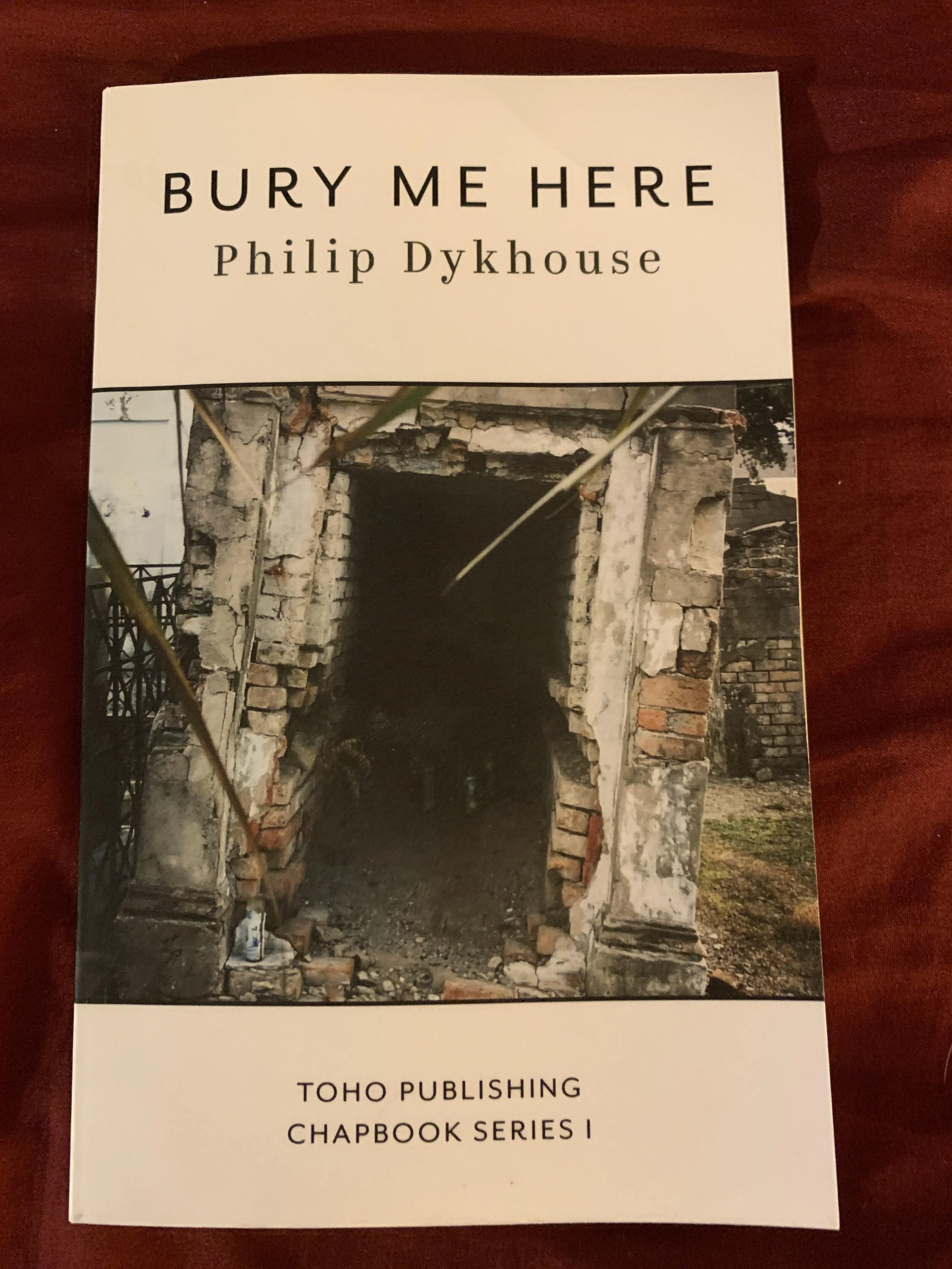
Philip Dykhouse lives in Philadelphia. His chapbook Bury Me Here was published and released by Toho Publishing in early 2020. His work has appeared in Toho Journal, Moonstone Press, everseradio.com, and Spiral Poetry. He was the featured reader for the Dead Bards of Philadelphia at the 2018 Philadelphia Poetry Festival.

POeT SHOTS - 'THE THOUGHT-FOX' by TED HUGHES

POeT SHOTS is a monthly series published on the first Monday of the month. It features work by established writers followed by commentary and insight by Ray Greenblatt.

POeT SHOTS #10, Series C

THE THOUGHT-FOX

I imagine this midnight moment’s forest:
Something else is alive
Beside the clock’s loneliness
And this blank page where my fingers move.

Through the window I see no star:
Something more near
Though deeper within darkness
Is entering the loneliness:

Cold, delicately as the dark snow
A fox’s nose touches twig, leaf;
Two eyes serve a movement, that now
And again now, and now, and now

Set neat prints into the snow
Between trees, and warily a lame
Shadow lags by stump and in hollow
Of a body that is bold to come

Across clearings, an eye,
A widening deepening greenness,
Brilliantly, concentratedly,
Coming about its own business 

Till, with a sudden sharp hot stink of fox
It enters the dark hole of the head
The window is starless still; the clock ticks,
The page is printed.

Getting an idea is like a fox approaching. “Warily a lame/Shadow lags by stump and in hollow/Of a body.”… “Coming about its own business.”… “It enters the dark hole of the head.” Adorned in brilliant poetic language.

greenblatt.jpeg

Ray Greenblatt has been a poet for forty years and an English teacher longer than that. He was an editor of General Eclectic, a board member of the Philadelphia Writers Conference, and is presently on the staff of the Schuylkill Valley Journal. He has won the Full Moon Poetry Contest, the Mad Poets Annual Contest, and twice won the Anthony Byrne Annual Contest for Irish Poetry sponsored by The Irish Edition. His poetry has been translated into Gaelic, Polish, Greek and Japanese.

Review of Philip Dykhouse’s Bury Me Here

phil 2.jpg

Bury Me Here

Toho Press

$9.99

You can buy the book here and here

Reviewed by Chris Kaiser


“He has taken us on a journey of discovery, and we are better people for it.”

“Mememto mori,” the reminder that we all will die, traces its history to Socrates.  In Plato’s Phaedo, Socrates says, “The one aim of those who practice philosophy in the proper manner is to practice for dying and death.” In this sense, Philip Dykhouse is a philosopher for our time.

In Dykhouse’s inaugural chapbook Bury Me Here, the poet explores physical death as well as emotional death and loss. Rather than being morbid about it, however, Dykhouse is probing and honest.

Dykhouse wants us to think about dying, about the death of hope, about the despair that comes with a series of accumulated losses. Even though the poet is barely scratching 40, he posits like a man who has seen his fair share of adversity and one who takes life’s challenges seriously.

The poet’s writing style is spare and tough, with a rhythm and musicality that could fit in the repertoire of many rock musicians. While one gains an overall sense of contemplation and/or tragic forebodings when reading his work, each poem carries its own puzzle, sometimes concealed behind clever word play or unique metaphors.

“The Last Song on the Album,” for example, talks about “tear ducts” being a “delta feeding my most rapid / eulogies of all I tried to say.” When the poet complains about not having enough time to reconcile with the idea of death, he writes: “the credits always seem to be rolling.”

In this poem, the last in the collection of 20, Dykhouse lets loose an existential cry that seems to have been building since the first page. The poet appears to be at a funeral in a cemetery. He wants to feel an emotional heft that’s just not there.

Please cut off my index
fingers, but only after I’ve
written a few letters goodbye.

The finality of death is terrifying, but our treatment of it has become standard and clichéd. Death is an inconvenience, which is why “burials often take place / early in the morning.” And we’re good with all the physical accouterments — traffic stickers and after-funeral parties. But are we equipped to deal with death from the inside out? That is the question Dykhouse poses here and ends this poem with a plea to the universe:

Can anyone please tell us when it starts?
Can anyone please tell me when it ends?

The order of the poems in Bury Me Here seems to suggest distinct periods in the poet’s life. First, reminiscing about his childhood: “I haven’t prayed for anything / since I played centerfield twenty years ago.” Then a few poems about a reckless youth, perhaps involving too much alcohol. “There is nothing left to my / glass but the rocks, and / they crash against my lips…” (with a nod to Homer’s Odyssey).

By the time we get to the seventh poem, “Iceman of Philadelphia,” we sense the poet has begun to reclaim his life.

Broken hearts were
once a concern of mine.
That is until man’s folly
carved a hole in my chest.

In this poem as in others, Dykhouse works his metaphorical magic, especially when he claims: “I’m a lionhearted loser / on a lone wolf leash.”

This poem, and the next one, “Surfaces,” where Dykhouse advises the reader to  “Pull my veins out; / coil them from your / wrist to your elbow,” reminded me of Charles Bukowski. And it’s no wonder as Dykhouse told me in a phone interview that Bukowski is one of his favorite poets.

“Not only did Bukowski have a dark view of the world, but he had the balls to say it. And he said it in as few words as possible,” Dykhouse told me.

Once the poet has reclaimed his life, he branches out into the world. “Poison in the Pit” creates a dystopian landscape distinguished by class differences, and a group of people in a pit relying on scraps to eat.

In “Among the Dead,” Dykhouse seems to chronicle the loss of faith. “You must go now, Father. / They’re tearing down the church.”

And then we arrive at “No Vacancy No Vacancy,” a poem where Dykhouse thoroughly bares his soul. The poet uses the device of presenting two parallel poems: one with stanzas in normal type, the other with alternating stanzas in italics (hence, the italics in the title). The commonality of both poems is that the events have left an indelible mark on the poet’s psyche.

In one half of the poem, Dykhouse, perhaps in his late teens, recounts the death of his father, who was not healthy, in more ways than one:

He rented a small, single room
at a motel that a friend of his owned.
That’s where he lived, alone.

The other half of the poem details a prank that friends pulled on the poet as a young boy.

I soon saw what they had
brought me there for.
They had dug a hole—
a hole deep enough that if a boy
were to fall in, he would
need someone to help him out.

The boys did indeed push the young Dykhouse into the pit from which he could not escape without their help.

Dykhouse has prepared us for this emotional journey by carefully crafting succinct poems loaded with vivid imagery and twisting metaphors — “It’s a wasteland in these / dictionary days, endlessly / competing with the meanings” — that convey the yearnings of a curious mind to find answers to questions that may be unanswerable.

The remaining few poems in the collection express an air of emotional maturity perhaps missing in previous poems. To paraphrase Joseph Campbell, the poet has gone into the dark forest for an extended period of time and has emerged a new man. In the poem “A Western World in an Eastern Universe,” he states:

There should be a shift in my thinking,
a monumental movement towards
an easiness generally found on the
porches of somewhere else.

We have come full circle with Dykhouse. He has taken us on a journey of discovery, and we are better people for it. My only suggestion to this maturing poet is that he title his poems with words or phrases that more concretely describe their central theme. Having the title supply us with an emotional or intellectual expectation might make our journey through his vivid metaphors all the more meaningful.

Dykhouse was born in Upper Darby, Pa., but grew up in South Jersey. Eventually, he moved to the Manayunk section of Philadelphia, where he currently resides. He works as a manager at Bridgewater’s Pub in 30th Street Station, Philadelphia. His poetry has appeared in Toho Journal, Moonstone Press, everseradio.com, and Spiral Poetry.

Besides Bukowski, Dykhouse claims the Pulitzer Prize-winning poet Stephen Dunn as a major influence. His library also contains the works of e.e. cummings, Lawrence Ferlinghetti, Leonard Cohen, and Sylvia Plath, among others. 

Oftentimes the world demands more of us than we bargained for. The pressure is immense to prove ourselves, all through life, every day, every moment. The poetry in Bury Me Here shows us how one man rose to the challenge of defining himself on his terms. And it does so by employing many poetic devices including symbolism, irony, metaphor, allusion, and hyperbole. Death and loss didn’t deter Dykhouse; rather the twin existential struggles motivated him, freed him from the prison of ignorance.


bio 2.JPG

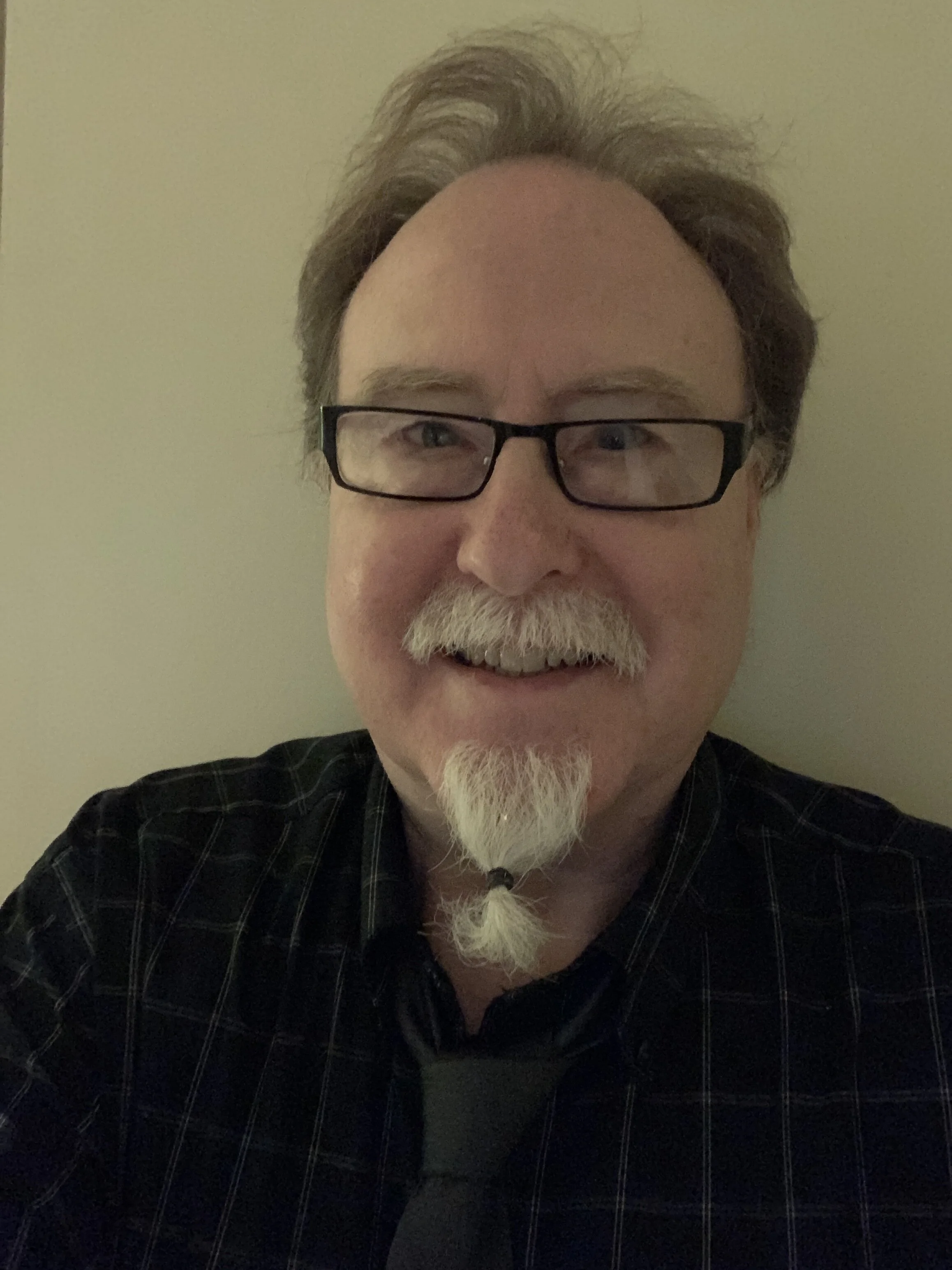
Chris Kaiser’s poetry has been published in Eastern Iowa Review, Better Than Starbucks, and The Scriblerus. It appeared in Action Moves People United, a music and spoken word project partnered with the United Nations, as well as in the DaVinci Art Alliance’s Artist, Reader, Writer exhibit, which pairs visual art with the written word. He’s won awards for journalism and erotic writing, holds an MA in theatre, and lives in suburban Philadelphia.

Local Lyrics featuring Joel Dias-Porter

Local Lyrics hosted by John Wojtowicz appears on the 3rd Monday of each month. In it, John features the work and musings of a local poet.


The East Wind

rising and falling

the voice of old mother

Joel Dias-Porter

How would you describe your poetic aesthetic? 

 I think the whole point of having an aesthetic is that it speaks for itself. I do try to reproduce the effects of music on the page and I love playing with structure and structures, obviously my aesthetic also reflects a lot of the poetry I’ve read and admired over the course of my life. 


What does your process look like when that all-possible-blank-page is in front of you?

 Not a process person and while it appears to be of great interest to many writers I consider conversations about it to be mostly a waste of time. I sit down, play around and try to have fun. That’s it. If I get a poem, I get a poem, If I get a line, I get a line, my goal is just to enter the Temple of Logos and worship for a few.


You often incorporate references and allusions to music (specifically jazz) in your poetry. How does music influence you and your writing style?

 I reference a lot of music, R&B, Jazz, Hip Hop, Cape Verdean music, etc. I think one of the great intellectual failures of Western Academic production is that there still is no coherent Theory of Euphony, although millions of words have been devoted to metrical prosody (much of it nonsense when it comes to English). So I created my own and some of its tenets are borrowed from the way I think music works. 


You’ve placed first in the National Haiku Slam and second in the National Poetry Slam. Do you have to put yourself in different mindset for writing haiku vs free verse? 

 I write in many forms, both received and bespoke and it’s all just poetry to me. Sometimes a poem starts out one way and ends up another way. I just try to do whatever produces the best poem. 


Do you know which form you are going to use before you set out to write the poem? 

I write in a lot of forms so generally speaking no, but I can usually feel if a poem is best suited to a Japanese short form like Haiku or Senryu. 


You often post haiku you’ve written in response to current events on your Facebook page. I really loved the one you wrote in response to the confrontation between riot police and the peaceful violin vigil for Elijah McClain. What are your thoughts on poetry as news and the opportunity to respond to events poetically in real time via social media? 


Thank you. It’s mostly about self-care for me personally, although I love the fact that I can instantly “publish” and share early forms of my poems this way. Poetry is part of how I process the world and the whole Elijah McClain situation hurt me very deeply, in part because it appears he was on the spectrum. 


Your family is from the Cape Verde Islands and you sometimes utilize Portuguese-Creole words in your writing. Are there other ways you incorporate your roots into your writing?

 All the ways, my brother, all the ways. 

Bentu Lestri
Ta subi ta kai
vos di Mai Belha

The East Wind
rising and falling
the voice of old mother


Where can readers find more of your work? Where can we buy your books?

 I don’t have a book. I post most of my Japanese short form poems on Twitter (@diasporter) because there’s a community of those poets there and it lets me leave a contemporaneous record. 

joel dias-porter.png

Joel Dias-Porter, born and raised in Pittsburgh, served in the US Air Force, and after leaving the service became a professional DJ in the DC area. In 1991, he quit his job and began living in homeless shelters, while undergoing an Afrocentric self-study program. He competed in the National Poetry Slam, finishing second place, and was the 1998 and 1999 Haiku Slam Champion. His poems have been published in Time Magazine, The Washington Post, Callaloo, Antioch Review, Red Brick Review and the anthologies Meow: Spoken Word from the Black Cat, Short Fuse, Role Call, Def Poetry Jam, 360 Degrees of Black Poetry, Slam (The Book) and many others. He has performed on the Today Show, in the documentary SlamNation, on BET and in the feature film Slam. The father of a young son, he has a CD of jazz and poetry on Black Magi Music, entitled LibationSong.


wojto.jpg

Catfish” John Wojtowicz grew up working on his family’s azalea and rhododendron nursery in the backwoods of what Ginsberg dubbed “nowhere Zen New Jersey.” Currently, he serves his community as a licensed social worker and adjunct professor.  He has been featured in the Philadelphia based Moonstone Poetry series, West-Chester based Livin’ on Luck series, and Rowan University’s Writer’s Roundtable on 89.7 WGLS-FM. Catfish John has been nominated 3x for the Pushcart Prize. He has been a workshop facilitator for Stockton University’s Tour of Poetry at the Otto Bruyns Public Library of Northfield and will be facilitating a haiku workshop at Beardfest Arts & Music Festival at the end of August. Recent publications include: Jelly Bucket, Tule Review, The Patterson Literary Review, Glassworks, Driftwood, Constellations, The Poeming Pigeon, and Schuylkill Valley Journal. Find out more at: www.catfishjohnpoetry.com

Review of Caroline Furr's A Foreigner’s Conception

Furr.JPG

A Foreigner’s Conception

By Caroline Furr

Toho Publishing

$9.99

You can buy the book Here or Here.

Reviewed by Sean Hanrahan

“In this collection, Caroline Furr makes her mark on the poetry scene with her experience as a visual artist.”

How do we engage with art? How do we engage with society? Are we perpetually on the outside looking in? Can we have one foot firmly planted in the world, and one foot firmly planted in our own idiosyncratic landscape of observation? Can we take it all in? In her sui generis poetic debut, A Foreigner’s Conception, Caroline Furr explores these questions with surrealness, wit, and an intoxicating sense of wonder.

Being a visual artist, Furr often explores her own relationship to artists, artworks, and art movements. In “no exit,” she writes “a window opens at noon / the fauves arrive and spring through.” Using painterly and colorful language, she celebrates Fauvism’s moment in the artistic spotlight:

         with a perspective only they knew
bright shades of red
went to their heads
and blue was no glue.

Perspective is as important in art as it is in poetry. The Fauvists saw the world in their way, created art, and then had to watch as Cubism took over the art world:

         when cubism arrives
to inhabit twin facets
hat morph in boxes
brown boxes (oh no).

In succinct, precise language, Furr describes the displacement that art movements (artists) feel when they have been followed by a modern movement that rejects them. Not one for despairing pronouncements, she ends the poem with her uplifting and accepting outlook: “so it’s best to let them be / to do whatever it is they do.”

In “ode to a statue,” Furr explores a foreigner’s conception of a statue from Italy with the hypnotic whoosh of the lines: “we knew you were from Italy / land of fast cars and sewing machines / a place with principles on position and momentum.” With the language of Futurism, the reader can picture Furr, or even themselves, looking at this statue from a place that may or may not be familiar to them and engaging with art from perceiving the piece as well as its origins. In this poem, language is the key to decoding art, and conversely, art becomes the key to unlocking the power of language. In the poem, Futurism turns almost romantic with “it may have been just moviemaking / but such a lush country / with its dells and waterfall surprises.”

Furr’s sense of surrealism comes to the forefront in the prose poem “Little Known Facts” as she catalogs the various artistic representations and imaginings of the Buddha over the years.

         The boy was always at horseplay
and since he was unable to adapt to the lotus
position, she [his mother] allowed him to spend afternoons at the
cinema where he could sit in comfort.

In Furr’s contemplation of the Buddha, he pursues a “new entertainment” of “reclusive wandering.” The Buddha finally ends up married to “a woman, much older it is said.” She ends the poem with the image of the outsider attempting to understand art, perhaps even life itself: “a wife would know a false beard, a foreigner / could only guess.”

Art can also be the site of gender politics. In “cornice—a horizontal projection.,” Furr opens with the penetrating and astute statement: “if politics displayed itself in architecture / so gender might.” She then compares the strong features of a building to strong qualities that can be found in women:

         she creates a hasp
by erupting from beneath
and puts a roof over the sky
  puffy pink penumbra
disguised as a girl.

This may be the most powerful, succinct poem in this chapbook full of such poems. This is a poem that builds a new paradigm in four stanzas, in thirteen lines.

In this collection, Furr also takes time to analyze human relationships where we are prone to hiding our flaws from our partners. The second stanza of “pioneering” contains the observation “so your scarf / what does that hide that she wants to know / see and touch.” The lovers create a world for themselves as only pioneers can. This tender poem concludes with the evocative stanza: “deep into the wood forming a bracket / it has turned to night now and we see better / as they stack it up together against bad weather.”

In this collection, Caroline Furr makes her mark on the poetry scene with her experience as a visual artist, her extraordinary uniqueness, her humor, and her keen powers of insight. I have never read a collection with the intellectual curiosity and glee for iconoclastic language that this chapbook displays. This work will stay with you for a long time. It will be a work you will return to as either an analysis of the world today or as an imaginative flight from it. This collection works on multiple levels that I am only slowly beginning to discover.

Hanrahan headshot.jpg

Sean Hanrahan is a Philadelphian poet originally hailing from Dale City, Virginia. He is the author of the full-length collection Safer Behind Popcorn (read review here) (2019 Cajun Mutt Press) and the chapbooks Hardened Eyes on the Scan (2018 Moonstone Press) and Gay Cake (2020 Toho). He is currently at work on several literary projects as well as teaching a chapbook class. He currently serves on the Moonstone Press Editorial Board, is head poetry editor for Toho, and is workshop instructor for Green Street Poetry.

In Their Words - an Interview with Bill Van Buskirk

Back in 2017, Steve and Mike sat down with Bill Van Buskirk. He presents a few poems, and they discuss writer’s block, Zen, and why we write.

Click the picture to see this part of the interview. For the complete interview, go to Mike Cohen’s Youtube channel by clicking HERE.


bvb.jpg

Bill Van Buskirk lives in Bryn Mawr Pennsylvania. His poems have appeared in The Comstock Review, The Paterson Literary Review, LIPS, The Schuykill Valley Journal, Parting Gifts,The Mad Poets’ Review and many others. His chapbook, Everything that’s Fragile is Important, received an honorable mention in the Jesse Bryce Niles Chapbook contest (2007). His book, This Wild Joy that Thrills Outside the Law, won the Joie de vivre contest sponsored by the Mad Poets’ Review (2010).


Delia and Cohen.jpg

Steve Delia and Mike Cohen have worked collaboratively and independently as poets and supporters of the arts in the Greater Philadelphia area. Mike Cohen helps to run the Poetry Aloud and Alive series at the Big Blue Marble Bookstore, and has had his fingers in many poetic ventures over the years. Steve Delia is the author of 6 chapbooks of poetry, and has read in a variety of venues, including the Philadelphia Writers Conference and on WXPN. Steve and Mike have also appeared throughout the Philadelphia area as the Dueling Poets.

POeT SHOTS - 'MIRRORS AT 4 A.M.' by Charles Simic

POeT SHOTS is a monthly series published on the first Monday of the month. It features work by established writers followed by commentary and insight by Ray Greenblatt.

POeT SHOTS #9, Series C

MIRRORS AT 4 A.M.

You must come to them sideways
In rooms webbed in shadow,
Sneak a view of their emptiness
Without them catching
A glimpse of you in return.

The secret is,
Even the empty bed is a burden to them,
A pretense.
They are more themselves keeping
The company of a blank wall,
The company of time and eternity

Which, begging your pardon,
Cast no image
As they admire themselves in the mirror,
While you stand to the side
Pulling a hanky out
To wipe your brow surreptitiously.

This poem is full of mystery. Is there any place in the world for humankind? Inanimate things—mirrors, walls, time, eternity—thrive. They do not want to put up with even “an empty bed” or hanky, let alone our image in the glass. Sarcastically, they do not “beg our pardon.”

greenblatt.jpeg

Ray Greenblatt has been a poet for forty years and an English teacher longer than that. He was an editor of General Eclectic, a board member of the Philadelphia Writers Conference, and is presently on the staff of the Schuylkill Valley Journal. He has won the Full Moon Poetry Contest, the Mad Poets Annual Contest, and twice won the Anthony Byrne Annual Contest for Irish Poetry sponsored by The Irish Edition. His poetry has been translated into Gaelic, Polish, Greek and Japanese.

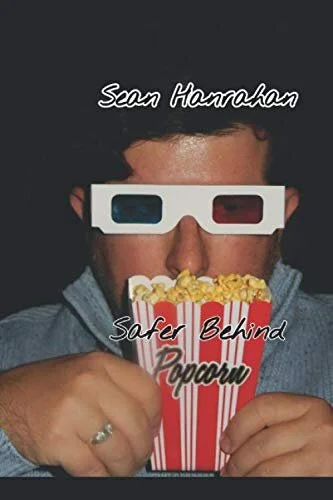
Review of Sean Hanrahan’s Safer Behind Popcorn

sean hanrahan.jpg

Safer Behind Popcorn

By Sean Hanrahan

Cajun Mutt Press 2019

You can buy the book here.


Reviewed by Chris Kaiser


“The writing style creates a breathless, frenzied energy that almost feels like we’re swept up in a movie narrative.”

The full-length collection of poetry titled Safer Behind Popcorn by Sean Hanrahan is a whirlwind journey through old and new Hollywood and popular culture, exploring not only the absence of notably gay figures, but also the damage that such absence does to the psyche of young and impressionable LGBTQ minds.

Hanrahan uses biting wit and an immense storehouse of film knowledge to probe the inner and outer boundaries of a suffocating cultural norm that left him and many other gay men drifting aimlessly during crucial times in their lives when larger-than-life role models would have been beneficial.

Have there been advancements in how gay characters are treated in Hollywood movies? Well, Brokeback Mountain had the most Oscar nominations of any film in 2005, but lost to Crash in the Best Picture category.” Eleven years later, Moonlight, a film about the struggles of a black, gay man, won Best Picture.

“There’s still a stereotype problem,” Hanrahan told me in a phone interview. “TV has come farther than film,” he admitted, “but until we get a gay Tom Cruise-type character that stands for something other than being gay, we’ll still lag behind.”

There’s no doubt Hanrahan was angry when he wrote many of the poems in Safer Behind Popcorn. And can you blame him—when we have to rely on the U.S. Supreme Court in 2020 to affirm that the 1964 Civil Rights Act prohibits discrimination against gay and transgender workers!

In the book, Hanrahan often vents about the indignities gay men like himself face in a world where heterosexuality is prized as the norm. A huge film buff, Hanrahan uses movies as the backdrop for many poems that call attention to discrimination—or just plain nonexistence.

In the opening poem “Film Noir You,” the poet takes old Hollywood to task for its narrow-minded treatment of gay actors and characters. He writes:

you thought
my eye was on the fop
sweat I knew he would not
make it to the final
reel since directors are
convinced pansies are so
evil

The writing style Hanrahan employs here—short sentences with no punctuation—creates a breathless, frenzied energy that almost feels like we’re swept up in a movie narrative.

Hanrahan writes that if Hollywood directors used more gay characters, their “wrists will tire of / soft angles” and that gays don’t sell well overseas, “taking our / morality from box / office receipts.”

 He ends this poem about Hollywood’s gay cancel culture thusly:

Humphrey may
have had his own Paris
with me but in forty-
three we were denied black
and white reality
kept out of cinemas
escorted from backlots
with our genitals snipped
bleeding out without a
cause or a backstory

While reading Safer Behind Popcorn and researching many of the themes in the book, I came across a 2016 article in Out magazine titled “Decoding the Gay Subtext in the Hollywood Classic, The Maltese Falcon.”

In the poem “Humphrey,” Hanrahan touches on some of the themes discussed in the article, such as Bogart’s manliness, his effeminate co-stars, and the phallic nature of the Maltese falcon.

But in the end, the celluloid closet wins. “Homosexuality cannot survive the noir, a McGuffin / for bigots blinkered by the unfamiliar.” That line also is just one of the many beautiful poetic phrasings Hanrahan is capable of.

Hanrahan has a lot to complain about, given the bigoted behavior of society towards LGBTQ people. But the poet often shows his softer side as well.

The prose poem “Wishing You Were Here with Me” is a wonderful, sometimes bittersweet, ode to Hanrahan’s relationship with his grandfather. The poet notes that he was different from the other grandsons. Movies were his passion, rather than sports. But the sports movie, A League of Their Own, plays a pivotal role in the young poet’s life.

The poet is reminiscing decades after watching the movie with his grandfather. He writes: “A strange occurrence that a man from a Western / Pennsylvanian town could believe in me and / accept me even if he never fully understood why / I was so different from my local cousins, that I was so / different from everything he had ever encountered.”

The poet is confident, he writes, that his grandfather would have been his biggest champion had he “lived to see me come out.”

But while Hanrahan and his grandfather were bonding, the poet still lacked a language to get him through “jock hero” crushes in high school. He had to keep his distance from his man-crush because he couldn’t even articulate how he felt. “Hollywood / hadn’t invented a language, just some vague actors hanging / around the edges of John Hughes’ films.”

The ease with which Hanrahan weaves in and out of movie metaphors is impressive. Not only are people in his life connected to specific movies, but also the filter with which he views the world is intimately connected to movie making.

In “Supporting Actor,” for example, the poet writes about his uncle, who is dying of cancer: “We wrote each other / out of our screenplays, supporting actors / missing from the latter reels of the film”.

This poem also contains one of my favorite lines: “so many decades dissolve / like half-melted candy stuck in a cluttered glovebox.”

Another good line comes from the poem “The Pansy and the Maid,” where Hanrahan rails against the movie-making Production Code that limited screen exposure for black and fey characters. “They need to be assuaged our / light loafers won’t pinch heroic toes.”

And this gem from “The Sword in the Stone”:

Then, I’ll pull a rusted
sword from the stone
my heart has become,
petrified from accumulated death.

Hanrahan is originally from Virginia, and has lived in Washington, DC, and New York City on his way to Philadelphia, where he currently resides. In 2018, he published the chapbook, Hardened Eyes on the Scan (Moonstone Press) and this spring, Toho Press published his chapbook, Gay Cake. He’s been published in anthologies and journals, and currently serves on the Moonstone Press Editorial Board, is head poetry editor for Toho Journal, and is an instructor for Green Street Poetry.

He told me that if it weren’t for reading Sylvia Plath while in high school, he wouldn’t be a poet today. Other poets that have influenced him include Sonia Sanchez, e.e. cummings, Mark Doty, Allen Ginsburg, and Frank O’Hara.

This is his first full-length collection of poetry and the scope is striking. Hanrahan takes us to Paris and Morocco, to Naples and New York City and beyond. His subjects span popular culture, including Johnny Depp, Luke Perry, Prince, Mel Gibson, Madonna, Wonder Woman, Oscar Wilde, Marylyn Monroe, and Jeff Daniels.

 The last name, Jeff Daniels, appears in the poem “Egyptian Rose,” from which the book gets its title: “I wish Jeff Daniels would walk out / through the screen into my life. / He’s safer behind popcorn, though.”

One thing Hanrahan doesn’t do in Safer Behind Popcorn is play it safe. Knives are unsheathed as he skewers popular culture for turning its back on the LGBTQ community. But even at his most devastating, Hanrahan cannot conceal his love of Hollywood and movie making.

 And he does so with a poetic energy that is fresh and evocative, with language that is carefully crafted and seemingly spontaneous, and with a reverence for art that leaves one salivating for a large bucket of buttered popcorn and a good movie.

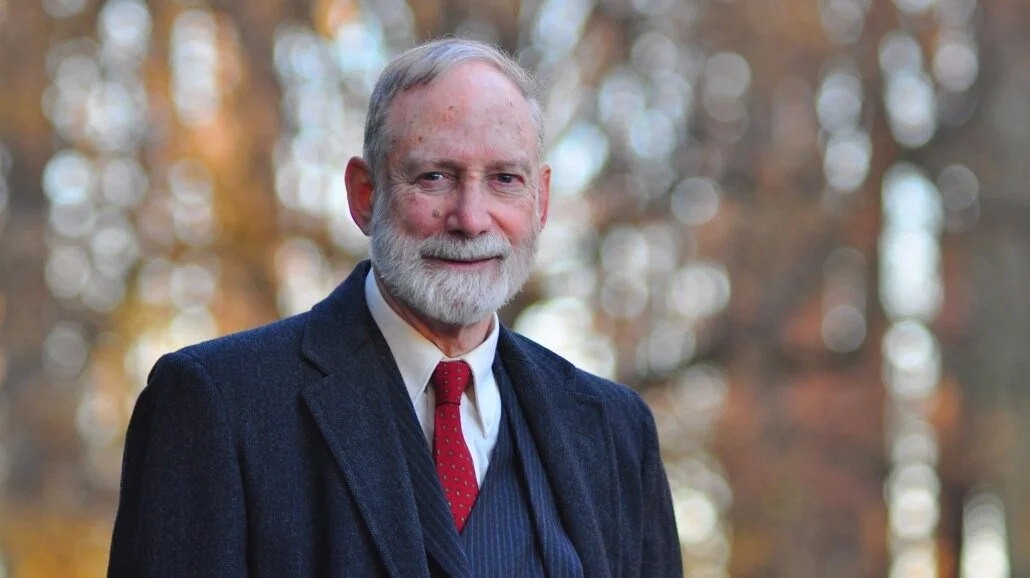
Chris Kaiser’s poetry has been published in Eastern Iowa Review, Better Than Starbucks, and The Scriblerus. It appeared in Action Moves People United, a music and spoken word project partnered with the United Nations, as well as in the DaVinci Art Alliance’s Artist, Reader, Writer exhibit, which pairs visual art with the written word. He’s won awards for journalism and erotic writing, holds an MA in theatre, and lives in suburban Philadelphia.

Local Lyrics - Featuring R.G. Evans

Local Lyrics hosted by John Wojtowicz appears on the 3rd Monday of each month. In it, John features the work and musings of a local poet.

I find that most people are hungrier for poems than they know. It’s like having a vitamin deficiency. Your stomach may be full, but your body isn’t being nourished.

MOON AT DAY

Pulling down the rotten boards
of a swing set no longer loved,
I feel you up there over my shoulder.
I built these swings myself
a dozen years ago. The tilt,
the lurch, my work for sure.
Now I pull it down and you pull too,
eye that couldn’t wait for the night.
The tide in me rises to think
of those unborn children
who might have made me keep
these posts from falling apart.
A little paint. A little patch.
Maybe you’re one of them,
looking down on me now
as I go about my best work:
destruction. Only one of you there,
precocious, ignoring bedtime.
Where’s the other?
Maybe Halley’s Comet, silver sibling,
running wild across the heavens,
not to return till I’m most surely gone.
These boards are full of rusty nails.
My knees creak like the gallows.
My daughter is sealed away in her room
writing stories that don’t include me.
Only you can see me wipe my eyes
that burn in the lowering sun.
Only you have the grace to linger
as sky gives way to sky, empty blue
to a black freckled with impossible light.

Evans 1.jpg

Q and A:

How would you describe your poetic aesthetic?

I would say my poetic aesthetic is as broad as the range of poets who have influenced me. Sometimes my poems resemble the philosophical “mindscapes” of Stephen Dunn. Sometimes they are weirdly surrealistic like the work of Russell Edson or James Tate. Sometimes humorously bewildered like the prose poems of Louis Jenkins.

In your award-winning book Overtipping the Ferryman, you’ve collected poems that cover experiences over a breadth of (seemingly) lived experience. What was your process in selecting/organizing these poems?

That book is essentially every poem that I had written over the course of maybe ten years that I deemed worthy of being included in a book. One of my poetry mentors, Renee Ashley, always writes poems with the end goal of a book in mind, but I had never written poems before with the intention of publishing a book. Once I chose the poems I thought were good enough to collect, I looked for links between them—themes, images—and then ordered them accordingly.

You are retiring this month after 34 years of teaching high school English. How have your thoughts about the place of poetry in America changed during your tenure working with youth?

I find that most people are hungrier for poems than they know. It’s like having a vitamin deficiency. Your stomach may be full, but your body isn’t being nourished. I’ve seen young people come alive not only from being given permission and the time to write poems, but also in the interpretation of poems in non-creative writing classes. Poetry is often neglected in the American high school, and everyone is much worse off for that fact. Many times, young people have introduced me to poets they are passionate about as well, so I would say the place of poetry in America is a still a very narrow street but very much a two-way street.

Is there anything unique about your process? Do you have any advice for writers struggling to find their voice?

Usually if I’m not reading poetry, I’m not writing it either. There something about reading good poems that primes the pump and makes me want to pick up a pen and make something of my own. For my second book, The Holy Both, I typed up aphoristic passages from Cyril Connolly’s The Unquiet Grave, cut them into strips and used one strip a day as a springboard for writing. Although it worked out for me, I do not recommend this process. As for voice, my own voice seems to change from poem to poem. I don’t know that writers need worry about finding their voice. They should let each poem’s voice find them.

You are a songwriter as well as a poet. Your new single “Could’ve Been the Stars” has gotten a lot of play at least on my stereo system. What is your experience with the differences/similarities of writing a song verses versus a poem?

Stephen Dunn has remarked that if a line in your poem sounds like it belongs in a country and western song, take it out. What I do is take all those deleted lines and voila!--instant country songs! Seriously, when I write poems, I generally write in free verse. My songs conform much more to rhyme and fixed rhythms. I find that structure comforting when writing songs, like following a road map to an unknown destination. Whether writing poems or songs, though, I try to heed my own advice that I give my students: it’s your job to write something that has never been written before, not something familiar.

Where can readers find more of your work? Where can we buy your books? Listen to your music?

Overtipping the Ferryman is available on Amazon and The Holy Both is available on Main Street Rag’s website www.mainstreetrag.com My CD is available on Amazon and is also on most streaming services.


evans+2.jpg

R.G. Evans’s books include Overtipping the Ferryman (Aldrich Press Poetry Prize, 2013), The Holy Both, and the forthcoming Imagine Sisyphus Happy. His original music has been featured in the poetry documentaries All That Lies Between Us and Unburying Malcolm Miller. His debut CD of original songs, Sweet Old Life, was released in 2018. Evans is retiring this summer after thirty-four years teaching high school English. He teaches Creative Writing part-time at Rowan University. www.rgevanswriter.com.


wojto.jpg

Catfish” John Wojtowicz grew up working on his family’s azalea and rhododendron nursery in the backwoods of what Ginsberg dubbed “nowhere Zen New Jersey.” Currently, he serves his community as a licensed social worker and adjunct professor.  He has been featured in the Philadelphia based Moonstone Poetry series, West-Chester based Livin’ on Luck series, and Rowan University’s Writer’s Roundtable on 89.7 WGLS-FM. Catfish John has been nominated 3x for the Pushcart Prize. He has been a workshop facilitator for Stockton University’s Tour of Poetry at the Otto Bruyns Public Library of Northfield and will be facilitating a haiku workshop at Beardfest Arts & Music Festival at the end of August. Recent publications include: Jelly Bucket, Tule Review, The Patterson Literary Review, Glassworks, Driftwood, Constellations, The Poeming Pigeon, and Schuylkill Valley Journal. Find out more at: www.catfishjohnpoetry.com

In Their Words - An Interview with Ray Greenblatt

in 2018, Steve and Mike sat down to talk with poet, educator, and long-time Mad Poet collaborator Ray Greenblatt. In this segment of the interview, Ray talks about his experiences with the Overbrook Poets, what inspires him to write poems, and more!

Click on the image to see this segment of the interview. For the full interview, as well as interviews with other local poets, click HERE to go to Mike Cohen’s Youtube channel.


greenblatt.jpg

Ray Greenblatt has been a poet for forty years and an English teacher longer than that. He was an editor of General Eclectic, a board member of the Philadelphia Writers Conference, and is presently on the staff of the Schuylkill Valley Journal. He has won the Full Moon Poetry Contest, the Mad Poets Annual Contest, and twice won the Anthony Byrne Annual Contest for Irish Poetry sponsored by The Irish Edition. His poetry has been translated into Gaelic, Polish, Greek and Japanese.


Delia and Cohen.jpg

Steve Delia and Mike Cohen have worked collaboratively and independently as poets and supporters of the arts in the Greater Philadelphia area. Mike Cohen helps to run the Poetry Aloud and Alive series at the Big Blue Marble Bookstore, and has had his fingers in many poetic ventures over the years. Steve Delia is the author of 6 chapbooks of poetry, and has read in a variety of venues, including the Philadelphia Writers Conference and on WXPN. Steve and Mike have also appeared throughout the Philadelphia area as the Dueling Poets.

POeT SHOTS - 'THE THIN EDGE OF YOUR PRIDE' by Kenneth Rexroth

POeT SHOTS is a monthly series published on the first Monday of the month. It features work by established writers followed by commentary and insight by Ray Greenblatt.

POeT SHOTS #8, Series C

from The Thin Edge of Your Pride

Out of the westborne snow shall come a memory
Floated upon it by my hands,
By my lips that remember your kisses.
It shall caress your hands, your lips,
Your breasts, your thighs, with kisses,
As real as flesh, as real as memory of flesh.
I shall come to you with the spring,
Spring’s flesh in the world,
Translucent narcissus, dogwood like a vision,
And phallic crocus,
Spring’s flesh in my hands.

The Father of the Beats, mostly a political poet, but his love poems were exquisite. Losing his beloved wife Andrée at an early age, he never forgot her nor their transcending love. Her spirit is alive in nature.

greenblatt.jpeg

Ray Greenblatt has been a poet for forty years and an English teacher longer than that. He was an editor of General Eclectic, a board member of the Philadelphia Writers Conference, and is presently on the staff of the Schuylkill Valley Journal. He has won the Full Moon Poetry Contest, the Mad Poets Annual Contest, and twice won the Anthony Byrne Annual Contest for Irish Poetry sponsored by The Irish Edition. His poetry has been translated into Gaelic, Polish, Greek and Japanese.

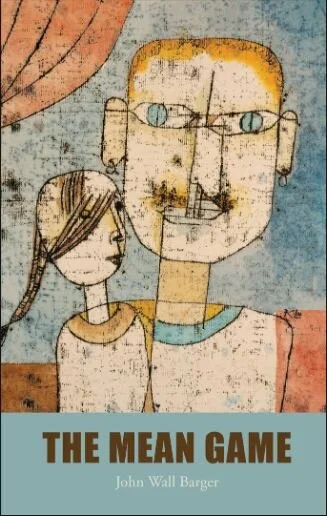
Review of John Wall Barger's The Mean Game

barger.JPG

The Mean Game by John Wall Barger

Palimpsest Press

$18.95

Click HERE to buy.

Reviewed by Chris Kaiser


In The Mean Game, John Wall Barger holds up a courageous mirror to nature. We don’t get a Disney-fied version of life. Rather we get the requisite amount of joy and sadness, of humor and violence. Barger has a deft touch with language, using it to produce an array of emotional responses. That’s not to say his poems lack intellectual heft. They don’t. But he leaves it up to the reader to decide how much the poems will be interpreted as intellectual exercises and how much they will be regarded as emotional journeys.

While he seems intent on making the reader go though something in the theater of their mind, he also seems resolved not to want to generate any particular meaning or lesson. For this reason, readers should be aware of sudden shifts in the poetic narrative.  

Take the poem “The Problem with Love,” in which a boy inherits his dead brother’s pet tarantula. His mother asks if he is “fucking man enough” to take care of the spider. The boy says he is. Barger teases us with normalcy, almost as if this poem is a meditation on adolescence, on growing up. The boy cares for his new pet, feeds it and tells it stories. But after a bad dream, he

woke in the dark, found Ma’s hair scissors,
reached into the spider’s house
& cut off a leg.

This sharp turn of events continues spiraling out of control, as the boy cuts off all the legs—twice—until they do not grow back. The spider

                                    sat in her house,
gray, hissing like a punctured
basketball.        

The reader may still be tempted to interpret this poem as a commentary on growing up, especially when the boy sacrifices the spider to ants, as if giving up his old self. But the reader has to be careful not to get too invested in having the poems be didactic. They may start out as if there is a lesson to be learned, but they then become something else, more thorny and complicated, like life.

In this particular poem, we may have to go back to the title—“The Problem with Love”— for a clue of Barger’s intent. A common theme in this book is how ineffectual love can be, how love on its own doesn’t necessarily solve problems. The boy’s mother spends her time watching TV, leaving him on his own. After the legless spider is devoured by ants, the boy

hosed down the fish tank.
It took ten minutes to scrub it
spotless, so the sun
really shone through the glass.

Is Barger hinting that the problem with love is that it kills, and what it kills can be scrubbed clean and forgotten in the glinting sun? It could be, but this is one of the defining characteristics of Barger’s poetry: We intuit there’s a lesson to be learned but we’re not quite sure what it is. Barger is a wonderful tightrope artist. He toes the line between darkness and light, between illusion and reality.

“The Bureaucrats” is an example of this tightrope act, and it also contains my favorite opening line: “We never should have crossbred the bureaucrats with office supplies.” At first, the crossbred bureaucrats are valued for their interesting feats, “With microchip eyes, they send emails by winking, With opposable big toes they operate four staplers at once.” But they are being held against their will and escape. In the wild, they undergo a transformation and surreptitiously return. Barger writes, “One day at the mall there was a bureaucrat chewing a cheeseburger.” No one knows how or when they came back or how they took control. He then writes, “And just like that, without fanfare, the bureaucrats were in charge.” The poem could be read as a modern-day cautionary tale. But instead of The Office meets The Lion King, we get Big Brother meets Hannibal Lector. As in all bureaucracies, there are forms to fill out and penalties for mistakes. But in Barger’s world, the bureaucrats “wear our scalps as purses. Our spleens, they say, are delicacies. In broad daylight, I come across three bureaucrats crouched over a body in the street, feasting on it like starving boars. Leaving no waste.”

And so ends the poem, balancing whimsy and atrocity. But Barger’s narrators rarely have use for such labels. No, Barger is a skilled linguist and the moralizing, if any, takes place within the mind of the reader.

There’s a wonderful imaginative freedom in reading Barger’s poems. The language, for example, is often archaic or antiquated, adding to the poems’ mystique. In the opening poem, “Urgent Message from the Captain of the Unicorn Hunters,” the narrator says of the unicorns, “Enough have they tholed.” Thole can be found in Beowulf. It is an Anglo-Saxon word meaning to suffer in silence, without complaint. It is the perfect word to use here because the narrator is asking his listeners to “release” the unicorns who have done no wrong,

Those sealed in your attics. Those chained in our barns. Those on the nightmare yokes.
Those heads on your walls. This is our fault.

Most of the language in The Mean Game is simple and straightforward, even if the ideas and images are complex and layered. On occasion, like with “thole”, Barger sends the reader to the dictionary. In the “Last Book of the Last Library on Earth,” the narrator recounts:

 A heavy iron volume burst out
a stained glass window
to the stones at our feet
A scholar plunged after.
Our brothers of the light guns
& clear shields
spattlecocked him.

Spattlecock is an old Irish cooking term from the 1700s, which means to remove the backbone, generally of fowl, for easier grilling. The use of the word adds to the ancient feel of the poem, which also contains one of Barger’s many brilliant poetic descriptions: “I staggered away / in the kiln of dusk clutching it”.

Another poignant description is this one: “Her body held his thunder / the way language holds a flower.” This occurs in the poem “A Scornful Image or Monstrus Shape of a Wondrous Strange Fygure…” (the full title is much, much longer).

In “Tale of the Boy and the Horse Head,” one of the darker poems in the collection, Barger wonderfully captures the morning hue with this line: “Below, in the castiron dawn….”

Finally, in “The Fathers of Daisy Gertrude,” Barger’s deft poetic touch is on display when he tells us:

She slept
under a flowering tree
beside her scream
which remained quiet.

These are just a few of the many examples of how Barger can mesmerize us with his language. We are already in full throttle mode reading these works, a feat that the poet accomplishes, in part, by not using stanza breaks. Barger told me that while writing this book he was influenced by the poet James Tate who, in his later work, didn’t use stanza breaks. He says,

One reason for stanza breaks is to give the reader a little pause, a breather, to collect their thoughts. By not giving stanza breaks, Tate doesn’t allow the reader to rest and possibly break the spell. I was trying for a similar effect in these poems, to hold the reader, to grip them close for the time of the poem, so that there would be no break to the tension until the poem was over.

Barger was born in New York City but grew up in Halifax, Nova Scotia. He’s lived in various places around the world including India, Finland, Greece, and Hong Kong, and now resides in West Philadelphia. He teaches at the University of the Arts and La Salle University. The Mean Game is his fourth full-length poetry book, and his artistic maturity shows.

The Mean Game is a book that embraces opposites: joy and sadness, humor and violence, animals and humans, myth and matter. Barger’s poetic muse gravitates towards myth. Myths aren’t afraid to tackle the difficult subjects, to use violence and death as teachers. We are under a certain illusion that our happiness—our marriages, our jobs, our friendships—will last forever. Barger’s poems do not harbor that illusion. They disrupt our normal expectation, and do so with exquisite poetic skills.

I’ll close with these lines from the last poem in the collection “This This is the End.” They portend new things to come, hopefully also from this author:

And when and when the last bird shuts its eyes
And the flesh of the last whale

Drifts like pollen in turquoise ink
And dust devils are lords of the squares
And trees reclaim the stairs
Still the stars glister like sparklers
Aloft in the hand of a girl
Still the earth our grave hurdles with grace in the dark


kaiser new.JPG

Chris Kaiser’s poetry was published in Eastern Iowa Review, Better Than Starbucks, and The Scriblerus. It appeared in Action Moves People United, a music and spoken word project partnered with the United Nations, as well as in the DaVinci Art Alliance’s Artist, Reader, Writer exhibit, which pairs visual art with the written word. He’s won awards for journalism and erotic writing, holds an MA in theatre, and lives in suburban Philadelphia.

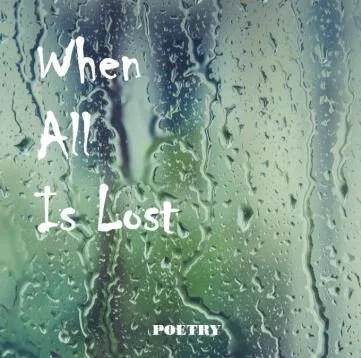
Review of Brandon Blake's When All Is Lost

Like a successful surgical procedure, Blake’s work may hurt at first, but it can also be a first step towards healing, a new state of emotional wellness.
Blake.JPG

When All Is Lost by Brandon Blake

Self-published $5.00

Click Here to purchase a copy

Reviewed by Sean Hanrahan


Some poets find their voice in, and respond to, historic and cataclysmic times or events. Other poets find their voice in, and respond to, the precise, poetic details to be found in everyday life. Brandon Blake’s newest, self-published chapbook, When All Is Lost, offers the reader nuanced and insightful poems that speak to the specific details of the narrator’s post-breakup existence as well as gross injustices occurring in Philadelphia. It is a slim collection (13 pages), but this work contains multitudes and has lingered in my mind longer than its length may immediately suggest.

In his poem, “The Day After,” Blake’s narrator describes a first thought in the first morning after a breakup:

Switching the alarm off
Before it detonates &
Interrupts melancholy states.

He continues to expand upon the emptiness of daily rituals without his partner, without someone to snuggle or shower with—

The shower’s heat doesn’t hold so well
This morning.

His commute has even changed and “lost its vibrancy.” This poem provides the reader with commandingly specific details that the narrator’s heartache becomes palpable, corporeal. The reader, then, is led to recall the details, the rawness of their own dissolved relationships. It is a testament to Blake’s wordsmith skills that he grants himself poetic space to express an intensity of feeling and grants readers the space to work towards their own catharses. Like a successful surgical procedure, Blake’s work may hurt at first, but it can also be a first step towards healing, a new state of emotional wellness.

Blake’s narrator uses his hobbies, as we all do, to distract from his pain, explored in the complex and devastating poem, “My Addiction with Origami.”

I found my fix
deep within the folds as
paper cuts and calloused fingers
provided needed distraction

He finds a place “to tuck away pride and ego” in his folding. He cannot totally escape from his current emotional state as his origami attempts begin to resemble his relationship. This poem resounds with the truth that art can be a way to mitigate our pain, but it is also the place where we confront it. I have rarely found a poem that expresses this fact with as much clarity and beauty as I have found in this poem, my favorite in this collection.

Blake ends this powerful chapbook with poems that move beyond the personal and enter the Philadelphia political arena. With the poem, “Hey Yo, Adriane,” he invokes the cinematic Rocky legend to relay the experience of a woman with a

Scrawny handwritten sign announcing
“Too ugly to prostitute.”

Whether through astute observation, intuitive imagination, or both, Blake gives a voice to this “Adriane to anyone’s Rocky,” a woman that many city-dwellers would choose to ignore. If only this poem was as well-known as the Rocky statue, we could see real change in Philadelphian society.

As a native Philadelphian, Blake also calls for us to remember the MOVE bombing of 1985 in the powerful closing poem, “Attention MOVE…This is America.” Blake paints a clear picture of that morning of devastation with the lines:

Eastern light
accentuating adrenaline-fueled veins
dissipating
in sweat behind blue collars
barely restraining the hounds of justice.

The tension and the sorrow build as all local readers know how this poem must end, although in a better and more humane world the MOVE bombing would not have taken place. But in 1985 and in America, it unfortunately did. Blake closes this vital chapbook with the image of,

dreadlocked cherubs
breaking free from the licks of fiery shackles
escaping Puritan purgatory
vanishing in the Philly skyline.

No poet, or pugilist for that matter, packs a punch like Brandon Blake.


Hanrahan headshot.jpg

Sean Hanrahan is a Philadelphian poet originally hailing from Dale City, Virginia. He is the author of the full-length collection Safer Behind Popcorn (2019 Cajun Mutt Press) and the chapbooks Hardened Eyes on the Scan (2018 Moonstone Press) and Gay Cake (2020 Toho). He is currently at work on several literary projects as well as teaching a chapbook class this spring. He currently serves on the Moonstone Press Editorial Board, as head poetry editor for Toho, and workshop instructor for Green Street Poetry.


Local Lyrics featuring Stephanie Cawley

Local Lyrics hosted by John Wojtowicz appears on the 3rd Monday of each month. In it, John features the work and musings of a local poet.


“I’m finding myself most wanting the company of many poets I already know and who, in ordinary times, it would be no miracle to spend time with … I’d honestly trade a chance to lay in a meadow with Emily Dickinson for it.”

Stephanie Cawley

from My Heart But Not My Heart

Does your mouth go wreath
when you want warmth?
Do you say fallen instead of
fallow? Does your tongue get stuck
in the gap between is and was?
There is an actual shrinking.
List all the animals you can.
Echo back these fifteen words.
You are a thin glass of water.
You are a cold wind and a field.
Don’t make them a story.

Q and A

How would you describe your poetic aesthetic?

I aspire to being a poet who is not loyal to any singular aesthetic, style, form, or mode of writing. I hope to continually reinvent myself, to find the forms and modes that a given subject or project requires and to always remain interested in trying something new with my work. I guess that is a kind of aesthetic or tendency in and of itself, though! And all that said, I recognize that I’ve been pretty dedicated to the prose poem and to poetry/prose hybrid forms for quite some time now. My first book My Heart But Not My Heart is an extended sequence that is mostly prose; I have a chapbook A Wilderness that is almost all prose poems; and my second book Animal Mineral will contain prose poems, a kind of lyric essay, and a long poem that rewrites a short story by Clarice Lispector, in addition to some standalone poems.


If you could spend the afternoon with one poet living or dead, who would it be and how would you spend your afternoon?

I haven’t spent an afternoon with any person other than my partner in about two months now, so I’m finding myself most wanting the company of many poets I already know and who, in ordinary times, it would be no miracle to spend time with. I’d love to spend an afternoon with my poet friends, maybe writing together, or reading poems to each other, or maybe just sitting outside having a drink. Right now, I’d honestly trade a chance to lay in a meadow with Emily Dickinson for it.


Is there anything unique about your process? Do you have any advice for writers struggling to find their voice?

I don’t know if it’s unique, but my writing process relies a lot on intuition. I generate work by dropping in to a space where I’m as unconscious about what’s happening on the page as possible, freewriting, writing while looking out the window, sometimes incorporating elements of chance or outside inspiration (eavesdropping, observation, grabbing bits of text from another book, drawing a tarot card). Then I come back later (sometimes much later) and read and shape and refine and rearrange and remix and apply structure. I am trying not to think of that second step as “cleaning up,” but as a process of reflecting on and bringing more intention into a work.


In your new book, My Heart But Not My Heart, you write about your experience with grief. Did you have a specific strategy when traversing the line between the personal and universal?

Writing the book began with a need to document and make space for my personal experiences of grief in the aftermath of my dad’s sudden death. It feels like American culture is pretty uncomfortable with death and with real grief, so writing this book became a way to make space for thoughts and feelings that felt unspeakable and unbearable in my daily life. I don’t really believe in universality or in striving towards it, but I did find myself curious about how my individual experiences connected to others’ experiences and connected to other bodies of knowledge. I wanted to try to understand what was happening to me, so I found myself turning to philosophy, neuroscience, and other cultural texts about grief and depression, which then made their way into the writing.


In this book, you seamlessly move between prose and poetry. Can you tell us a little about the decision not to box yourself into one form?

The book began with the sections that are in prose, which I started writing around the one year mark after my dad died. For that first year after he died, I was in graduate school, and I muscled through continuing to write kind of musical, lyrical poems, but it felt like I was going through the motions. Then, eventually, it felt like I couldn’t bear to write like that at all anymore, like I couldn’t approach my actual experiences with that kind of writing. So, after a while of not really writing at all, I started writing into a Word document in prose. I didn’t think what I was doing there was “real writing,” writing that would become anything or that anyone else would ever read, but it was the first time I felt able to actually arrive on the page. I wrote into that document every day for about a month, and then showed a bit of it to my teacher and mentor Dawn Lundy Martin who told me this was my book and that I had to keep writing it.

When I began to shape the book manuscript, I knew that by then I did also have some more “poem”-type pieces that were in conversation with the prose, so I spent a long time playing with order and structure before arriving at a kind of architecture that holds all these pieces together. It felt right, for a book about an experience of grief, for there to be aspects of the form that felt disorienting (the shifts between poetry and prose, the fragmentation, the pieces that occupy different parts of the page) and aspects that evoked an enduring sameness (the long prose sequences).


Where can readers find more of your work? Where can we buy your books?

You can get My Heart But Not My Heart right from my publisher Slope Editions (slopeeditions.org), from Small Press Distribution (spdbooks.org), or from Bookshop.org. You can also buy it from Amazon, but you shouldn’t! Even setting aside Amazon’s horrific labor practices, for small press books like mine, if you buy from the press or from indie retailers, more of your dollars will go back to support the press, which runs on a shoestring budget and volunteer labor. I also have a chapbook A Wilderness which you can get from Gazing Grain Press (gazinggrainpress.com). I also have work in various print and online journals which you can find links to on my website stephaniecawley.com.

Cawley.jpg

Stephanie Cawley is a poet from southern New Jersey and the Director of Murphy Writing of Stockton University. She is the author of My Heart But Not My Heart, which won the Slope Book Prize chosen by Solmaz Sharif, and the chapbook A Wilderness from Gazing Grain Press. Her poems and other writing appear in DIAGRAMThe FanzineTYPOThe Boston Review, and West Branch, among other places. Her next book Animal Mineral will be out from YesYes Books in 2022. Learn more at stephaniecawley.com.


wojto.jpg

Catfish” John Wojtowicz grew up working on his family’s azalea and rhododendron nursery in the backwoods of what Ginsberg dubbed “nowhere Zen New Jersey.” Currently, he serves his community as a licensed social worker and adjunct professor.  He has been featured in the Philadelphia based Moonstone Poetry series, West-Chester based Livin’ on Luck series, and Rowan University’s Writer’s Roundtable on 89.7 WGLS-FM. Catfish John has been nominated 3x for the Pushcart Prize. He has been a workshop facilitator for Stockton University’s Tour of Poetry at the Otto Bruyns Public Library of Northfield and will be facilitating a haiku workshop at Beardfest Arts & Music Festival at the end of August. Recent publications include: Jelly Bucket, Tule Review, The Patterson Literary Review, Glassworks, Driftwood, Constellations, The Poeming Pigeon, and Schuylkill Valley Journal. Find out more at: www.catfishjohnpoetry.com