America’s Favorite Playground
by John Arthur
My daughter asks if she can see
a picture of gravity.
She’s four but before I can answer,
more questions come at me,
gleaned, it seems, from the TV—
What’s a tariff? What’s a trade war?
We buy most of what we own
from the local thrift store.
Just home from work,
I sit next to her, still wearing
my new old peacoat, only $9.99,
one button missing, but warm
enough to get me through
at least the rest of this winter.
Now the anchor is saying Canadians
are expected to boycott—
no more trips this summer
to the Jersey shore.
When I was a valet in AC,
I used to count the Ontario plates,
smoking on the top floor
of the parking deck,
looking out at the gold plated facade
of the Trump Taj Mahal
before it was demolished.
It only took a couple
of well placed explosives.
I show my daughter a video
of the building imploding.
That’s gravity, I say.
What brings you to poetry? Why this art form?
I don’t fully know the answer to this and I probably never will, but I’ve always read widely (not just poetry, but fiction, non-fiction, graphic novels, whatever sparks my interest at any given time). Whenever I read something that I enjoy or that makes me think or that makes me see the world in a different way, I immediately want to try to do the same thing. Poetry is just one way of doing this. I also write short stories, have written many failed attempts at novels, and have been writing songs, primarily as a member of the band The Deafening Colors, for decades.
You’ve had a lot of jobs that show up in your poems from short-order cook to a librarian to boardwalk ride operator to government bureaucrat. What is your artistic relationship with labor and the world of work?
I incorporate all aspects of my life into what I write, so that naturally includes work because it takes up so much of my time. I’ve had dozens of jobs, and each of them has impacted me in different ways, mostly through the people you meet at work. For example, there were two summers when I was in college and graduate school where I worked with some good friends at a busy Jersey Shore restaurant. A lot of the people working there were only there for the summer and were from all over the world (or were local, but were also students, or recent graduates). There was a sense of transience to a job like that—you’re going to work hard for a few months, make friends with people very quickly, and then everyone is going to disperse just as quickly and you probably won’t see or talk to a lot of those people ever again, but they still leave an impression on you. Making art of any sort to me is just an attempt at capturing something transient. And everything is transient. And it’s impossible to really capture, you can just try to come as close as possible.
Your new chapbook was selected by George Bilgere as the winner of the 2025 Poetry Box Chapbook Contest. Tell us a little bit about how Lucy the Elephant Wins in a Landslide came to be.
I was honored to have George Bilgere select this collection—he’s really an excellent poet and the only reason I submitted was because he was judging. I didn’t set out to write a book about living and growing up in New Jersey, but because I’ve spent my whole life in Jersey, and because I’m middle-aged and a bit nostalgic, those are the poems that have come out when I sit down to write. I write every day. I have a rule that I have to write one poem a day and at least 500 words a day of prose. I haven’t missed a day for the prose in about three years, and I think in those three years I forgot to write a poem twice (and I wrote an extra one the next day to make up for it). I try not to think when I’m writing. I just write. The vast majority of what I write, well over 99%, will never be shared. The poems and stories I share are the ones that stick with me, which I then submit to various lit mags. I don’t know what will “work” for the editors or for readers. This is all a long-winded way of saying I have no idea what I’m doing. I just share what I want to share and hope for the best.
In this chapbook, you open and close with a haiku. What was the thought behind this choice? What connects you with haiku?
To me, saying a lot in as little a space as possible is the highest form of writing. I struggle with it. I’ve written thousands of haiku/senryu and very few of them “work.” I opened and closed the chapbook with haiku because I kind of thought of the structure of the book like it was an elaborate meal—the first haiku being sort of an amuse bouche and the last being dessert. I think I just needed a structure and that was the only way I’d actually sit down and put together a manuscript, so it was fun to conceptualize it that way. But since I think haiku can be the most impactful poems, I wanted to start and end that way, to draw someone in quickly and then hopefully at the end give them something to remember.
You are a Dad. How has parenting and caregiving affected your work? When do you find time to write?
My daughters keep finding their way into my poems because, as I said before, all parts of my life end up in my poems, and they are the most important part of my life, so parenting has probably affected my work more than anything else ever has and maybe ever will. There is just so much heightened emotion, and the sense that time is passing so quickly, and again it is an attempt at capturing something transient—your kids will only be little kids for so long, and there is an impulse to preserve and to record those moments. Poems are perfect for that. I find time to write usually in the middle of the night when I can’t sleep, or in any small moment when I have some time. I could be waiting in line at the grocery store and pull out my phone and write a haiku or two, or a few sentences. I write everything in my Notes app, so it’s always in my pocket ready to go.
Where can readers buy your book? Keep up with your work?
I recommend getting it direct from the publisher, though it’s available from the “big” online booksellers too.
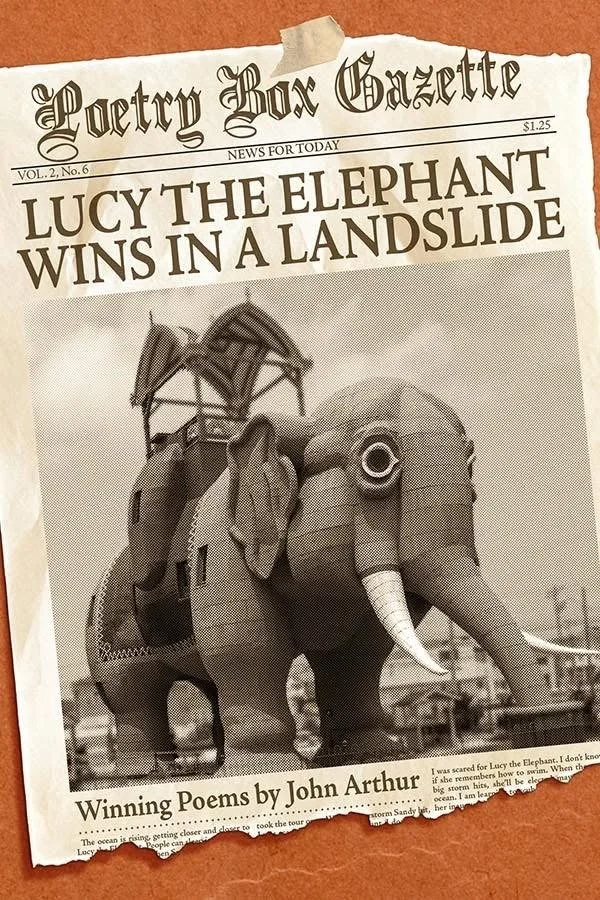
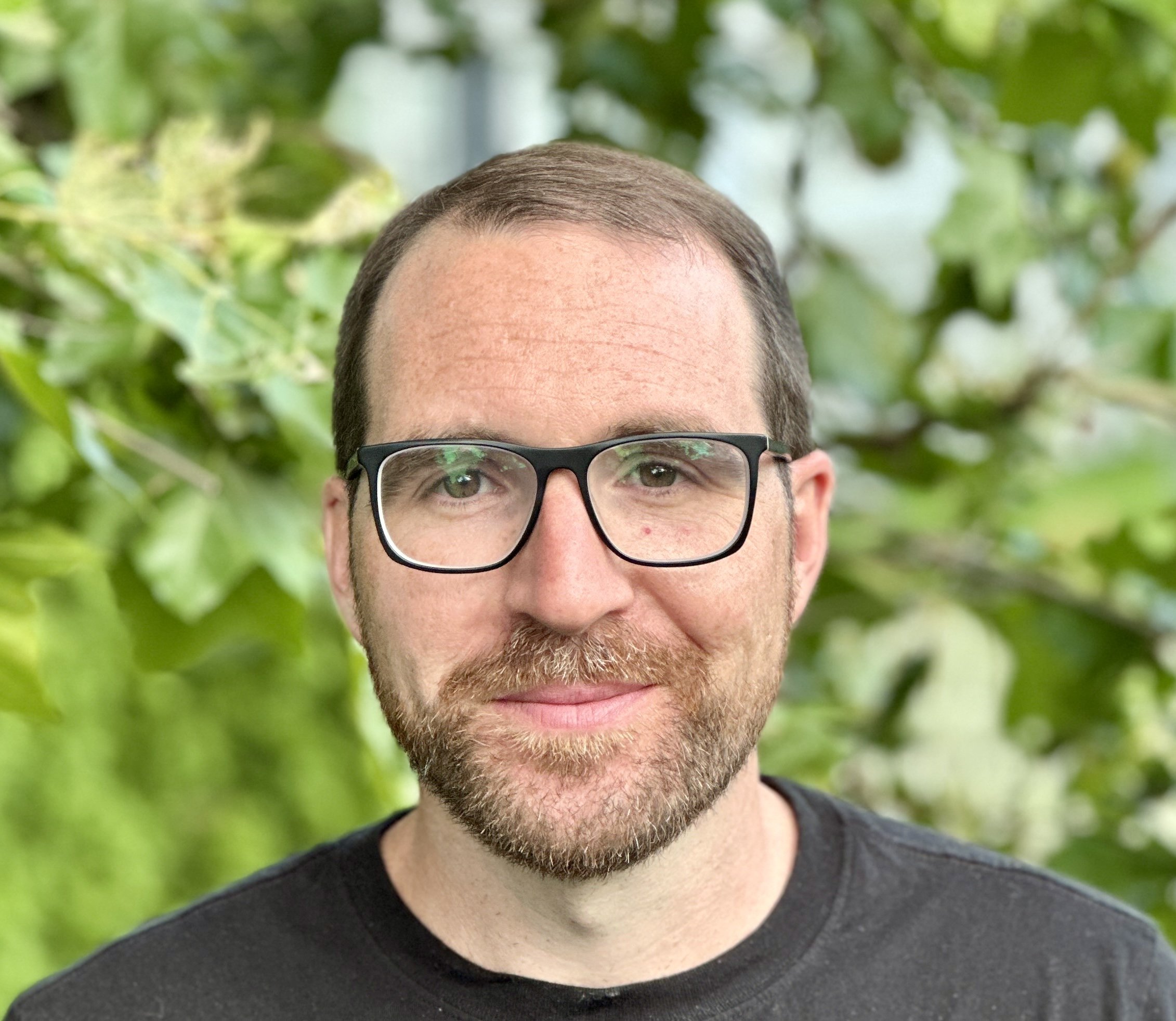
John Arthur is a writer and musician from New Jersey. His chapbook, Lucy the Elephant Wins in a Landslide was selected by George Bilgere as the 2025 Grand Prize winner of The Poetry Box’s chapbook contest and was released in February 2026. His work has appeared in Rattle, DIAGRAM, Frogpond, Failbetter, trampset, ONE ART, and many other places. He has worked as a valet at a casino, a waiter, a Ferris Wheel operator, a cook, a pizza delivery driver, a fast food delivery driver, a kati roll delivery driver, a landscaper for a week or so, a journalist, an editor, a librarian, a library director, a municipal manager, and for one long, hot day as a guy going door to door asking if you’d like to donate to the Sierra Club. His band is The Deafening Colors.
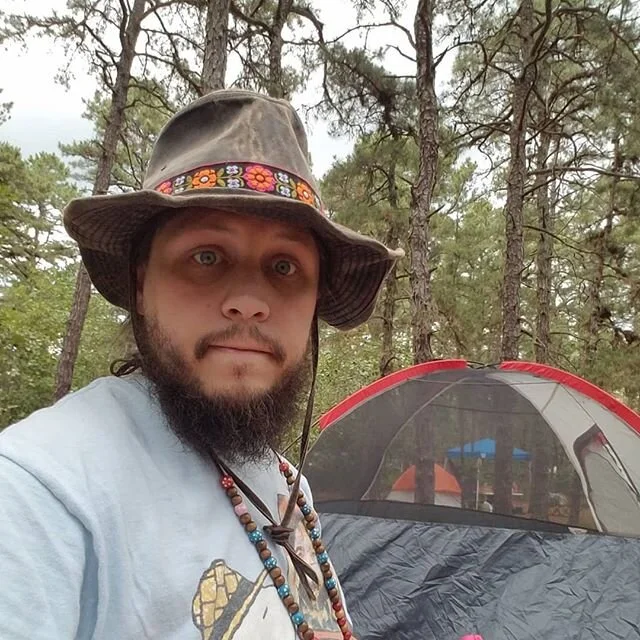
John Wojtowicz grew up working on his family’s azalea and rhododendron nursery in the backwoods of what Ginsberg dubbed “nowhere Zen New Jersey.” Currently, he works as a licensed clinical social worker and adjunct professor. He has been featured on Rowan University’s Writer’s Roundtable on 89.7 WGLS-FM and several of his poems were chosen to be exhibited in Princeton University's 2021 Unique Minds: Creative Voices art show at the Lewis Center for the Arts. He has been nominated 3x for a Pushcart Prize and serves as the Local Lyrics contributor for The Mad Poets Society Blog. His debut chapbook Roadside Oddities: A Poetic Guide to American Oddities was released in early 2022 and can be purchased at www.johnwojtowicz.com. He recently published No Lightsabers in the Kitchen. John lives with his wife and two children in Upper Deerfield, NJ.
