Dying Breed
by Jacqueline Jewell
I wonder—in which generation
will my heritage be forgotten?
When my mother was little,
playfully skipping through the terra rossa
with her sisters, snacking on goat cheese, pita, and olives,
did she know?
Did she know then
that she would one day reshape her life—
and her children’s lives—
into a quiet denunciation of that culture?
Did she know
when war erupted
and her mother called out to her children
to kiss the walls
of their Jordanian home goodbye forever?
Or when drones hummed overhead,
and silk and linen scarves were carried off by the wind—
lost without
a neck or head to call home?
And now I barely know,
and my son barely knows,
and maybe his son or daughter
won’t know at all.
They won’t know the strength of their great-grandmother,
who assimilated into a Western world
to shield her half-breed babies
from the same oppression.
How do I keep alive the ancient language
of my pyramid-building, continent-traveling, art-sculpting ancestors—
the ones who gave us za’atar, hummus, cumin, turmeric?
And why does it matter—
any of it—
when my child, beautifully blended, persists,
and so will his children after him?
Still,
a small tear in my heart deepens
at the thought of heritage undone.
Because it is more than a trait.
It is her.
It is in my blood,
in their blood,
ours.
It is what buries the bone
and shifts the sand
and dust.
You won an EMMY award for your journalism. How does your experience in journalism show up in your poetry?
My background in journalism continues to shape how I observe, listen, and record the world around me. Journalism trained me to pay close attention to detail, to verify, and to seek out truth through multiple perspectives. In my poetry, that translates into a strong sense of responsibility to the subject matter—especially when I’m writing about real people or lived experiences. I approach poems almost like investigative spaces, where I gather fragments of story, memory, and voice, and then reconstruct them with care and intention. At the same time, poetry allows me to move beyond strict objectivity and into emotional and imaginative truths, which is something journalism doesn’t always permit in the same way.
In your collection, Lady Arab, you document the journey of three generations of your lineage (including your own). Can you discuss your process in collecting these stories and turning them into poetry? How does this process differ from your work in journalism?
For Lady Arab, the process began with listening—conversations with family members, revisiting memories, and in some cases, filling in gaps where stories had been partially lost or left unspoken. I also spent time reflecting on inherited memory: the idea that even what isn’t explicitly told can still be felt and carried forward across generations. Translating these stories into poetry allowed me to move fluidly between documentation and interpretation.
My mom was a big part of this process as well. She allowed me to ask her difficult questions that brought up a lot of past traumatic events she experienced as a child. Her honesty gave me the strength to keep going—not just with her story, but with the voices of my grandmother, my mother, and my own voice throughout this collection. Writing these poems became something I carried collectively, rather than individually, because of that openness and trust.
Unlike journalism, where the goal is often clarity, accuracy, and balance, this work gave me space to explore tone, silence, and emotional resonance. While journalism requires a certain distance, poetry allowed me to lean into proximity—to write not just about my lineage, but within it. That shift created room for voice, perspective, and intimacy that would not typically be present in a traditional reporting context.
In your collection, Where the Poppies Burn, the poems give voice to the stories of those enduring the on-going genocide in Gaza. Can you tell us how you gathered these stories? What was this experience like in comparison to writing about your own family?
The poems in Where the Poppies Burn were shaped by a combination of listening to firsthand accounts, engaging with testimonies, and bearing witness to documented narratives shared by those affected. Much of the process involved sitting with difficult material—stories of loss, survival, displacement, and resilience—and allowing those voices to guide the emotional and ethical direction of the work.
This experience was very different from writing about my own family. With personal lineage, there is familiarity and inherited context; with these stories, there is a responsibility to approach them with humility, care, and an awareness of distance. I had to be especially mindful of not appropriating voice, but instead creating space for testimony to be honored.
I wanted to honor their voices as well by giving them a platform of creative expression—one in which they could share experiences that are often difficult to hear, but that still require the world to listen regardless. In that sense, the poems became a way of amplifying presence, rather than interpreting it.
Why did you choose to tell these stories with poetry rather than prose or another medium?
For me personally, I chose poetry because of its artistic ways of expression and the emotional honesty it allows. Poetry doesn’t always need to explain everything in order to be understood. Sometimes the silence between lines, the spaces, or even a single word placed in enjambment carries meaning that feels just as powerful as a fully explained narrative.
There is something about what is left unsaid that can speak just as loudly as what is written. In that way, poetry mirrors certain realities that don’t need over-explaining to be felt—similar to how an image of a war-torn scene can communicate the weight of loss in a single moment. Poetry allows me to hold space for that kind of impact, where the reader can sit with the image, the emotion, and the silence all at once.
During a recent reading at the Basket House Reading Series in Woodstown, NJ, you mentioned using “park benches” in your poems that involve trauma or intense imagery. What is this strategy and why do you find it necessary in your work?
The idea of “park benches” is something I credit to my former poetry mentor, Grant Clauser, who not only introduced me to the concept but also encouraged and pushed me to write this collection.
In practice, these moments function as pauses or grounding points within poems that engage with heavy or traumatic subject matter. They create space to breathe—for both the reader and myself—before moving into or out of more intense imagery. These shifts in tone or pacing allow the emotional weight of the poem to settle, rather than overwhelm, which ultimately strengthens the overall impact of the work.
I find this necessary because continuous intensity can desensitize or fatigue the reader. By intentionally creating these moments of stillness, the poem becomes more accessible, and the emotional resonance has room to land more deeply.
Where can readers buy your books? Follow your poetic journey?
Readers can find my Lady Arab poetry collection on the Moonstone Press website here:
https://moonstone-arts-center.square.site/product/jewell-jacqueline-lady-arab/RJ7BDHHQ4THVUUVFN6ZQOHOC
An extended new version is also available on Amazon here:
https://a.co/d/0dS0ZyXT
Where the Poppies Burn is also available on Amazon here:
https://a.co/d/0erT4F7r
I also share my poetry journey and updates on Instagram at @JJewell_writer.

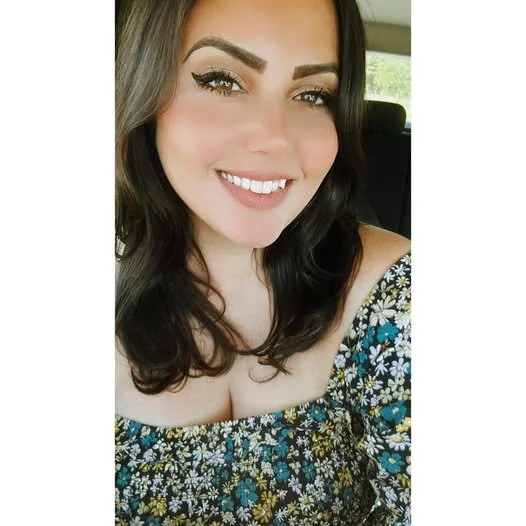
Jacqueline Jewell is a poet, communications and English professor, Emmy Award–winning journalist, and civil rights activist from the South Jersey/Philadelphia area. She is the author of two poetry collections: Lady Arab (Moonstone Press), a three-generational exploration of Arab womanhood tracing the lives of her grandmother, mother, and herself as they navigate racism, sexism, war, migration, and the reclamation of cultural identity; and Where the Poppies Burn, a searing and intimate witness to the ongoing genocide and trauma endured by the Palestinian people, confronting themes of apartheid, loss, devastation, hope, and enduring love.
A mother and lifelong advocate for justice, Jewell’s work is rooted in empathy, equality, and human dignity, guided by the belief that love is both resistance and survival. Her poetry honors lived experience while amplifying voices too often silenced, reminding readers that stories of adversity are ultimately shared human stories.
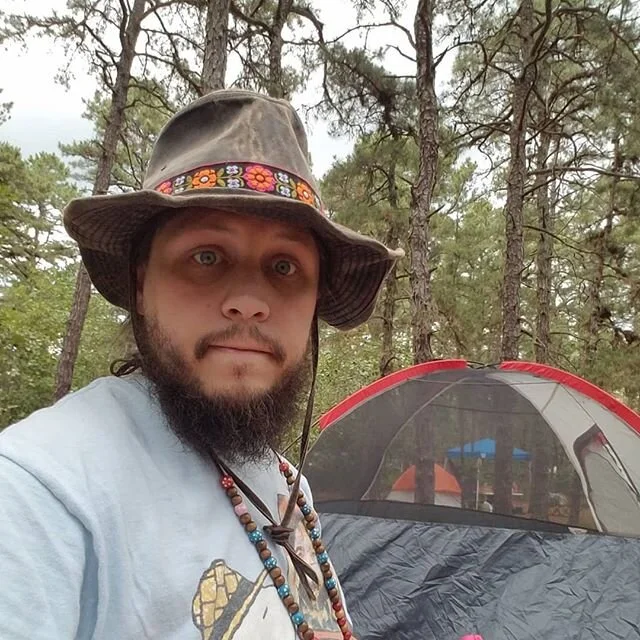
John Wojtowicz grew up working on his family’s azalea and rhododendron nursery in the backwoods of what Ginsberg dubbed “nowhere Zen New Jersey.” Currently, he works as a licensed clinical social worker and adjunct professor. He has been featured on Rowan University’s Writer’s Roundtable on 89.7 WGLS-FM and several of his poems were chosen to be exhibited in Princeton University's 2021 Unique Minds: Creative Voices art show at the Lewis Center for the Arts. He has been nominated 3x for a Pushcart Prize and serves as the Local Lyrics contributor for The Mad Poets Society Blog. His debut chapbook Roadside Oddities: A Poetic Guide to American Oddities was released in early 2022 and can be purchased at www.johnwojtowicz.com. He recently published No Lightsabers in the Kitchen. John lives with his wife and two children in Upper Deerfield, NJ.
