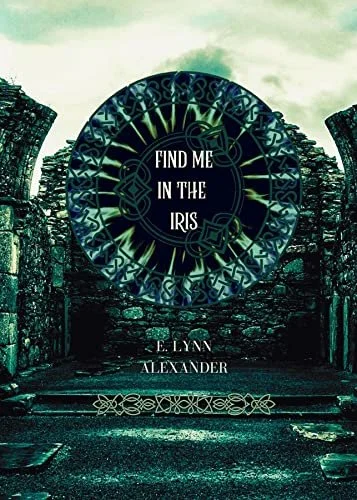
E. Lynn Alexander begins her searing poetry collection with an epigraph comprising the first five lines of her powerful poem, “Bottles of ‘Were’”
Bottles of “Were”
Of regrets.
Something she said
That stuck with me.
What will the grief of me teach you?
With that haunting opening, Find Me in the Iris explores the relationships between mothers and daughter and the internal and external selves with laser-focused intensity. The speaker’s memory of motherhood and other women are contained in the lines:
Bottles. Corked. And closed.
Women. Mothers.
Suspended
In their ages,
Selves, the slurry sentiment
Their labels going brown.
One could readily imagine a trip to the Mütter Museum and seeing a specimen floating in a glass jar. The imagery contained in this poem is reminiscent of Edgar Allen Poe or Anne Sexton. The line length and rhythm illustrate a cutting precision, sharply contrasting with the peaceful sibilance that is also deployed. Alexander is a poet working at the height of her craft.
Specimen imagery continues in the evocative poem, “Frogs with Glowing Eggs in Their Bellies.”
Particle flecks, held up to the light
I see tadpoles
Larvae. Eggs. Algae.
Mother-moon
Alchemy
Once again in brief yet pregnant lines, Alexander can certainly pack a punch. The reader can visualize the mystery of nature, perfectly preserved in suspension. There is something haunting and visceral about lives that never were. She continues:
I see metals of industry
Poisons.
Run off from the lawns.
Toxins. Plastics. Bag Phantoms.
The ghosts
of Wants vs. Needs.
Alexander is such a strong poet that she can bring in a vast environmental awareness into a mostly confessional space. She can vividly illustrate for the reader the complex chain of events that led to the speaker witnessing a preserved wet specimen almost glowing with dead life. This poem is one of the strongest in the collection and once again queries, “What will the grief of me teach you”?
“Odd Jobs” is another tour de force in Find Me in the Iris. In this poem, she lists metaphorical jobs the speaker holds as a poet including chemist, doctor, artist, plastic surgeon, butcher, factory farmer, geologist, inspector, regulating entity, and priest:
I am a priest. Pin women
to my trays. I dissect them.
I display their hands
I verify stigmata
I name saints
She categorizes eyes: “Hazel/Brown/Blue.” Until finally, “I find my mother’s iris/And I hold it up to mine.”
Alexander ends this brilliant collection with the title poem. The speaker asks the reader, a lover, a dead mother, any sympathetic soul to
Find me in the iris
in the blue
in the storm’s eye
in the silence
What we find in Find Me in the Iris is a remarkably self-assured poet dazzling us with provocative language and exquisite poems. This collection will haunt me for a long time to come. For anyone who loves precise and surprising language, Alexander’s work is the perfect eye-opening treasure.

Sean Hanrahan is a Philadelphian poet originally hailing from Dale City, Virginia. He is the author of the full-length collection Safer Behind Popcorn (2019 Cajun Mutt Press) and the chapbooks Hardened Eyes on the Scan (2018 Moonstone Press) and Gay Cake (2020 Toho). His work has also been included in several anthologies, including Moonstone Featured Poets, Queer Around the World, and Stonewall’s Legacy, and several journals, including Impossible Archetype, Mobius, Peculiar, Poetica Review, and Voicemail Poems. He has taught classes titled A Chapbook in 49 Days and Ekphrastic Poetry and hosted poetry events throughout Philadelphia.
