
nursery rhyme
originally published in The Journal
by Kailey Tedesco
there is loss in the haus of loss—all of us
embroidered in horror, twigs coming up
from the back of our throats. i don’t want to know
what is on the other end of the telephone. all of my parents
become motherships. my favorite mother UFOs
to me from her haus of tea—cups & saucers, hand-painted,
gable her a-frame. i wake bruised in crop-circle, all
my flesh a runway of inexplicable. there are woods
in the haus of wood. all the trees woozy, teasing
a fall. when the murderer comes from the grave
with matchsticks, we will tell him to take everything
he wants, but only if we are not there to see or hear him.
there are dreams in the haus of dreams. i fight
sleep & wake to find myself sheared, stuffed
with stones. my gut fauna surrounds me in a vigil,
all my sweet demons. there is a flood in the haus of flooding.
the lake waltzes, but doesn’t wave. i wake when my body
won’t, scarleted in nightmare, pins & needles
in my ears. there is sleep in the haus of sleep,
but so little.
Your poems have a gothic/horror/occult flavor to them. As popular as Edgar Allen Poe’s work is, there surprisingly aren’t a lot of poets working in this genre. What drew you to it?
My favorite thing about these genres are that they often are based upon a truth that is difficult to explain, and then through the lens of horror or the occult, the creator can seek to explain something that may, in the end, actually be unexplainable. That’s the magic in it all. This journey is often what I seek in my own writing, but in my reading and other media as well. Nearly all of my poems begin as straightforward confessionals based on something personal or truthful happening, and then they sprawl into something more illogical or fantastical or gothic as I crack them open wider and wider. For example, I’m in my second trimester of pregnancy now and at the same time working through some serious mental health issues for the first time. I’m absolutely nowhere near the first writer to explore pregnancy and mental health through the lens of horror, but I found myself surprised, nonetheless, by how easily these real life experiences lent themselves to these genres. My baby’s tiny hand running down my abdomen is beautiful and real, yes, but also the more I think about my body not being totally my own at the moment, the more disturbed I get. I strive for my poems to exist in these moments of disturbance and bewilderment, where things are both very beautiful but also very frightening.
One of the qualities of your work I really appreciate is that the worlds you create are breathable. They have that strange but hauntingly familiar quality. What are your strategies for grounding your poems?
Thank you! I teach a first-year writing course at Moravian College called Folklore and Legends: The Narratives we Choose to Believe, and one of the first things we look at when examining folktales as a genre is how these stories often begin in the realm of truth and then expand into the make believe. I like to apply that general narration style to poetry which is why I often begin with a more straightforward confessional or something very matter-of-fact. I love hauntings—the word haunting, the experience of being haunted, hauntings as a genre trope, a haunting cup or tea or bottle of perfume—the whole entire deal. And I think the coolest thing about hauntings is that they are, in all of their forms, so palpable and ubiquitous. I’ve never not been haunted, and the most unsettling thing about that feeling is that it’s already grounded in everyday experiences more than we might initially think. This is what makes authors like Shirley Jackson so fantastic—she writes about how ghosts and the occult mingle with the rigamarole of the everyday. A jar of jam can be haunted just as easily as a Victorian murder house can be. Those familiar hauntings are more or less what I hope to explore in my own writing.
How do you humor and explore poetic fascinations and preoccupations without getting too self-indulgent?
I think I’d say that I’m of the mind that self-indulgence in poetry is okay. I’m going to be careful with this statement because I’m certain there are exceptions, but I tend to be all about indulgences in poetry. There’s a line between arrogance and self-indulgence though, and I think this is usually pretty easy to detect. But I usually crave gaudy and gem-dripping and lush and wordy and excessive and sometimes even campy. And that especially applies when I find myself fascinated by something. I want to explore every facet and attempt understand how each of those facets applies to my own lived experiences. I’m also of the mind that the self is often the most important part of the poem, even if the poem isn’t “about” the self at all. It’s what gives poetry originality. I spent so many of my younger years trying to write and live like so many other authors, and I think that, more than self-indulgence, this showed up in and hindered my writing. If I’m into something and it is meaningful to me, I’m absolutely going to milk it.
I saw on your website you practice automatic writing. Can you describe this process and your experiences with it? Did this practice inspire Lizzie, Speak?
Yes, definitely! While in my MFA program at Arcadia University, I kept trying to work off of assigned prompts or set deadlines for myself to try to be more organized and studious about my writing. When I did this, everything felt extremely forced. I didn’t enjoy writing this way and my cohort was also picking up on how contrived my poems felt, because they truly were. I distinctly remember sitting down one day with the phrase “she used to be on a milk carton” playing over and over in my mind (which later became the title of my first book), and from that phrase, more words just oozed. I didn’t stop or question it—I just let the poem pour. This was the first time I felt energized by and connected to my writing in a very specific way, and so I kept exploring the feelings and environments that led me to this experience. I started reading about automatic writing practices, and later I attended a psychic retreat where I learned about working with the vibrations of names. This is what I do with a lot of my poetry; I begin with a word or phrase or image and then let the associations pour in while more or less in a trance state. This isn’t always easy to achieve and it’s not something I can plan, but it’s the method of writing that I find the most magical and enjoyable. I wrote a pseudo-craft essay about this exact thing over at Luna Luna Magazine for anyone else who might be interested in how this process works for me!
By the time I was writing Lizzie, Speak, I knew that I wanted to step outside of my own consciousness as much as I could and into Lizzie Borden’s. I used various divination techniques throughout this book to achieve this, including the IOS text predictive which strangely ended up being the most fruitful. I wrote this book faster than any of my others and I think a lot of that is because of how tapped into automatic writing and divination I was throughout the process. I loved the experience of stepping outside of myself, and I’m hoping to do something similar with my next project.
In addition to being a writer, you are an editor at Luna Luna Magazine. What excites you in others work? Are there qualities you see as quintessential to a successful poem?
Before I was on the staff at Luna Luna Magazine, it was already one of my very favorite publications. I would literally refresh the page over and over until new work popped up. So, it is such a huge honor to be able to contribute to and curate for the mag now. My aesthetic was already so aligned with LL’s, but I think the cool thing about that is how open our aesthetic actually is. I have such a hard time articulating what I find exciting in poetry, but I think that’s because I’m often most excited by what I didn’t previously know a poem could do. I love invention and I love strangeness. I also love poetry that is illogical, in the general sense of the word. I don’t want my favorite poems to “make sense” or operate under the realm of rationality. I think this ties to my philosophy on self-indulgence and just indulgence in general. My favorite poems indulge completely, and they’re totally unapologetic about it.
Where can readers find more of your work? Buy your books?
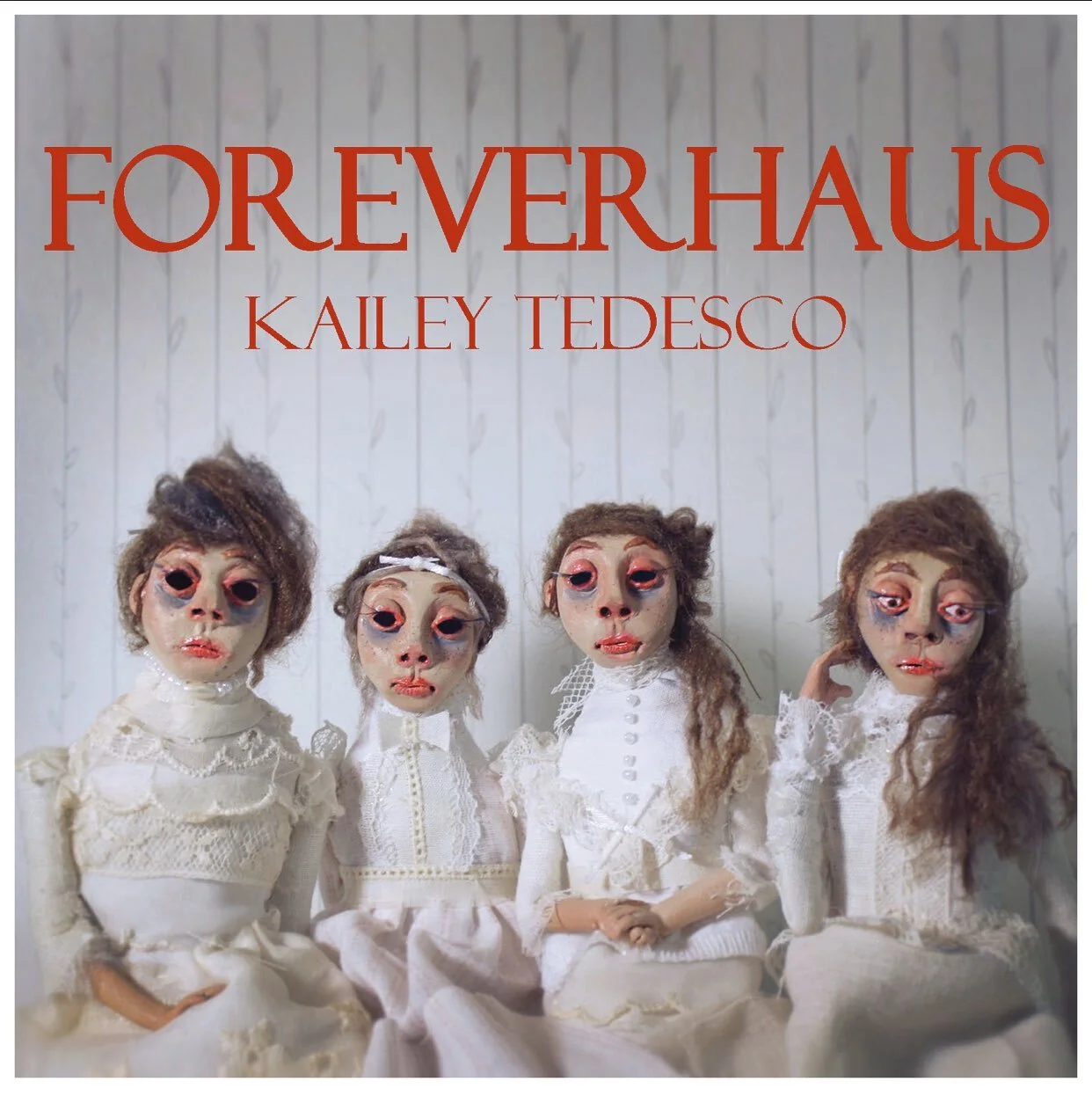
I’m finally getting into the habit of updating my website somewhat regularly, so readers can always check out my list of publications on kaileytedesco.com. My first book, She Used to be on a Milk Carton, is available for purchase on April Gloaming’s website. Lizzie, Speak and FOREVERHAUS can both be purchased on White Stag Publishing’s site as well as independent bookstores like The Spiral Bookcase and A Novel Idea, both based in Philly. My editor also created and curated some beautiful goods inspired by the poems in FOREVERHAUS like candles (made by Marvel + Moon), corn husk dolls, teas, and more. All of this can also be found on White Stag’s site.
One day, I hope to begin a newsletter, but in the meantime the best way to keep up with any of my goings on is on Instagram: @kaileytedesco. I post a lot of my writing here, but not anywhere near as often as I post pictures of my dog.

Kailey Tedesco lives in the Lehigh Valley with her husband and many pets. She is the author of She Used to be on a Milk Carton (April Gloaming Publishing), Lizzie, Speak (White Stag Publishing), and FOREVERHAUS (White Stag Publishing). She is a senior editor for Luna Luna Magazine and a co-curator for Philly's A Witch's Craft reading series. Currently, she teaches courses on literature and writing at Moravian College and Northampton Community College.
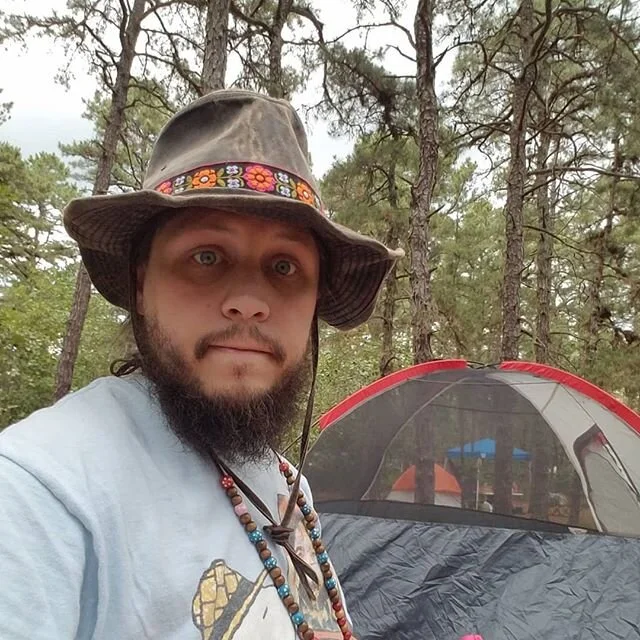
“Catfish” John Wojtowicz grew up working on his family’s azalea and rhododendron nursery in the backwoods of what Ginsberg dubbed “nowhere Zen New Jersey.” Currently, he works as a licensed social worker and adjunct professor. He has been featured in the Philadelphia based Moonstone Poetry series, West-Chester based Livin’ on Luck, Mad Poets Society, and Rowan University’s Writer’s Roundtable on 89.7 WGLS-FM. Find out more at: www.catfishjohnpoetry.com.
