
Mercy & Dolores
by Emari DiGiorgio
Let me tell you about my tits
who I named just for this poem.
They’ve been called small many times–
mostly by men, who must’ve earned
this authority in naming breasts
from fathers or well-meaning mothers
who let their sons think they were the first mouths to gum those nipples. Yes,
it is common practice to name a gift:
a stuffed bear, a toy boat Santa’s sent,
but I wasn’t nursing those Dorito-stained
lips, wasn’t some after-school shake
to be sipped on the bus ride home
when Dan god-my-judge Rollins leaned over
the seat and said the only twin peaks
I see around here ain’t very steep.
Instead of ignoring him, I wish I’d said
these little bitches are black diamonds; no
I wish I didn’t feel that avalanche of hurt
in the valley between my breasts, wish
I didn’t wish them bigger. This boy,
whom I’d defended when others shamed
his father’s drunken bouts, would trade
my kindness to be part of this alliance
of boys and men telling me I’m less
because of the size of my breasts.
I want to make them mine, instead
of training them to be an image
of what I thought they must be: buds praised
with sunshine and water until they bloomed
full magnolias, petal-soft, leaking sweetness.
These handfuls are enough and not yours.
I’m taking them back from the still August air
of that windowless bedroom, from the man
who’d worry my nipple until it grew
dull to touch because he said as a boy
he stroked the mole on his mother’s neck
to put himself to sleep. Yes, I let him
use my nipple as a pacifier
because I didn’t know these tits were mine.
Neither did my female colleague at the job talk
who said just put your pretty little tits on the podium
and read nor the busty clerk who recommended
the ultra-padded Very Sexy Push-Up Bra.
I’m taking them back from every human
who’d stop and stare, who’d toss a penny
into the well between my milk-swollen
breasts with a wish to kiss or bury their face
and every radical sorrow in them.
My blessed-to-be-maternal-rivers-of-milk
and my-daughter-at-their-banks breasts.
My nipples-glittering-like-copper-coins
no-one-can-make-me-spend breasts:
twin sisters, mercy and pain.

How do you begin a poem? What is your process when presented with that all possible blank page?
Sometimes a phrase or line guides me. It might be something I overheard or read, and it haunts me like an earworm. Other times, I have an idea or feeling but no language to accompany it yet. In both cases, I often “announce” the line or the idea and permit myself to freewrite by hand in a journal or to literally talk about and through it as an audio-draft recorded as a voice memo in my phone. I have a bad habit of self-censoring, even responding to your interview questions; I revise and edit before permitting myself to move forward. My analytical self is loud-mouthed and confident. I have to silence her for my creative self to emerge. If I don’t start on a computer screen, I can undermine the perfectionist and play on the page or in the air. That’s where my best writing comes from, when I don’t know what I’m doing or how to control it.
Your work succeeds in exploring connections between personal and political without coming off dogmatic. What is your strategy for this tightrope walk?
For me, I don’t think it’s possible to write about the political without exploring my personal connection. If a writer explores some concept or historical moment as “other,” they’ve missed a real opportunity for discovery on the page and in their life, and those poems likely risk appropriation or objectification. I have to uncover why I want to write about a particular topic or moment in time, how am I part of this story/tradition/tragedy. That complicity is crucial in my mind and work, as a human and as a writer. These questions are not easily answered, especially when writing about histories of oppression and privilege, so I trust that the language and music of a poem will help me.
In addition to a poet, you are a yoga practitioner and teacher. Do you find there are connections between practicing poetry and practicing yoga?
When we talk about yoga, we often focus on the physical practice, the asanas, but yoga is much more complex. Patanjali’s Yoga Sutras offers an eight-limbed guide to live with purpose and meaning, to acknowledge our connection with others and the natural and spiritual world. In that sense, I believe there’s a kinship between the practice and study of poetry and yoga. Both require deep listening and attention.
You recently became the director of Murphy Writing of Stockton University and host World Above: Open Mic & Featured Reading at the Noyes Arts Garage in Atlantic City. What are your goals when curating a space for writers? How does being enmeshed in a literary life effect your writing?
Whenever I’m curating a space for writers, whether it’s a community workshop or open mic or a more formal course at the University, my primary goal is to create a safe, inclusive space for participants to help them see themselves as writers and part of a writing community. This was vital to my own growth as a young poet, and I was so fortunate to be invited to attend Murphy Writing’s flagship program The Winter Poetry and Prose Getaway when I was nineteen. I firmly believe that the arts, whether literature, music, dance, sculpture, affirm our individual experience and connect us with each other, even when we come from very different backgrounds. There are poets among us everywhere–bagging groceries at Acme, teaching elementary subtraction, running the electric in a new home. I am grateful to provide opportunities for these lovers of language to gather, create, and share their work; and I am bolstered by these events, reminded #whypoetrymatters when so much of the world is cracked and broken.
What is your method when it comes to editing and revising your poems?
Because my initial drafting process produces unstructured prose, I will often experiment with formal constraints to help me revise. This might mean I rewrite the poem in a traditional form, such as a sestina or villanelle, or I might give myself some rules, such as couplets with seven-syllable lines. Then, I adhere to or abandon the form/rules I created in subsequent drafts. The use of form helps me overcome my narrative tendencies and experiment with sound and image. Ironically, formal structures help me play more in a poem.
Where can readers find more of your work? Buy your books?
You can find my books, sample poems, and interviews on my website: https://www.emaridigiorgio.com/. Check out my feature on NJ’s State of the Arts, too.
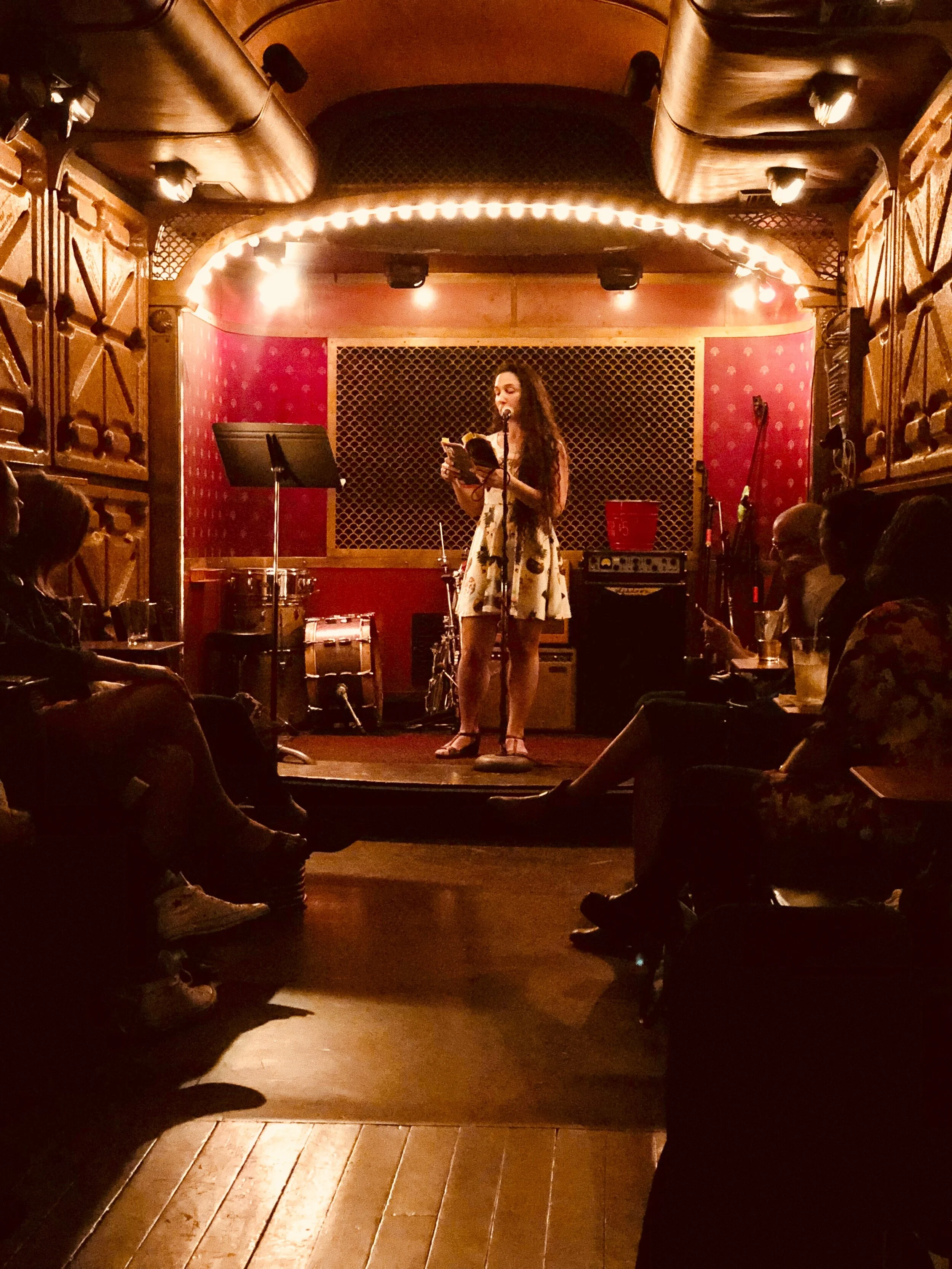
Emari DiGiorgio is the author of Girl Torpedo, winner of the Numinous Orison, Luminous Origin Literary Award, and The Things a Body Might Become. Her poetry has received numerous awards, including the Auburn Witness Poetry Prize, RHINO’s Founder’s Prize, and a poetry fellowship from the New Jersey State Council on the Arts. At Stockton, Emari teaches first-year writing and poetry, is the Faculty Director of Murphy Writing, serves as President of the Stockton Federation of Teachers. She is also a Geraldine R. Dodge Foundation Poet and hosts World Above, a monthly reading series in Atlantic City, NJ.
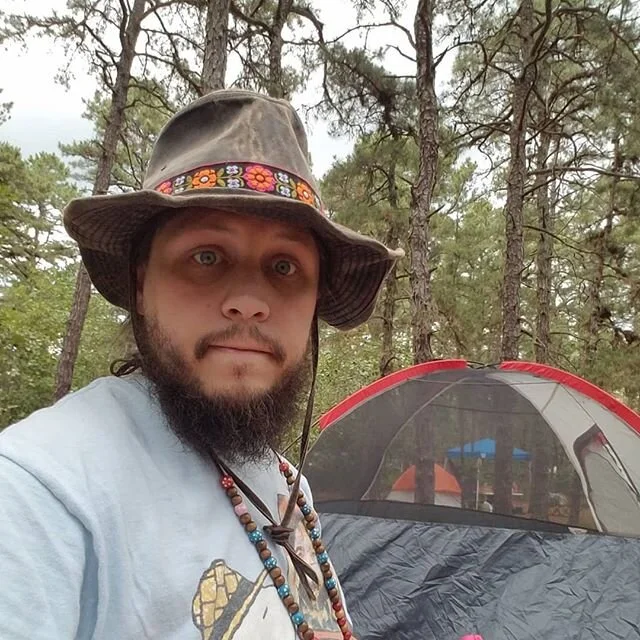
“Catfish” John Wojtowicz grew up working on his family’s azalea and rhododendron nursery in the backwoods of what Ginsberg dubbed “nowhere Zen New Jersey.” Currently, he works as a licensed social worker and adjunct professor. He has been featured in the Philadelphia based Moonstone Poetry series, West-Chester based Livin’ on Luck, Mad Poets Society, and Rowan University’s Writer’s Roundtable on 89.7 WGLS-FM. Find out more at: www.catfishjohnpoetry.com.
