The Apocalypse Came to My Block
by Lucia Herrmann
on a Tuesday when most folks still had their recycling out.
The season had finally turned hot enough spring so sound of swarming
pestilence was confused for hum of air-conditioning machines.
Managers at Whole Foods, Giant, and Acme reported once more
to the crowds outside their doors that the trucks had arrived empty.
Bananas, and oh, sweet sweet plantains had died decades ago—
endangered, extinction, lists were redundant.
No more berries or bengals, cocoa or bees,
peaches, puffins, or ASL-signing chimpanzees.
Then, suddenly
From basements, attics, parks, back-alley libraries,
on corners, & coming in hordes down the streets
were artists carrying craft:
clutching paint brushes, pouring words out of orifice,
contraction in long Os, taffy-knees loose bodies,
etches in concrete, tag up to dope beats,
hair braid, snip-sculpt, shaped clay, sound play,
drab cloth to regal view, needle point to next muse,
and ever-ready with onus of,
here came Lectores with stories to tell:
birds knowing where it is safe to nest,
not fighting to find home
a lonely leaf that fell before friends,
and how everyone cheered on the descent
mountains that moved over for siblings,
slowly, with patience what grace to make space
They told stories of death that didn’t begin with
unarmed, sleeping, or running away,
of birth that was always blessed.

How would you describe your poetic aesthetic? / What are you interested in poetically?
My poetic aesthetic is inextricably linked to my performance practice. Words are living, breathing entities and while the importance of how they are presented on the page is perhaps most obvious, for me the way they are brought to an audience is just as important. A lot of my poems focus on cultural authenticity, highlighting our shared humanity, and drawing attention to how climate change will radically change our societies and communities. I don’t usually rhyme in my poems but I am notably drawn to alliteration and assonance, and will often find myself unconsciously following a syllabic pattern just because of how it rhythmically sounded during the process of writing and refining. I believe part of the poet-artist’s responsibility is to comment on the ailments of contemporary society and imagine the more inclusive and equitable future we want to be part of. When there’s so much wrong with the world, and such a long track record of prioritizing profit over people, it’s hard to conjure hope and optimism. I hope my poetry inspires people to reevaluate their relationship to the planet, find a bit of beauty in unexpected places, and explore how to exist in a state of ecological belonging.
Poetry has been a really essential part of how I’ve come to understand my own identity and heritage. I have poems that detail the experiences of Cubans and Cuban Americans, particularly as it relates to Miami (as a transitory melting pot milieu) and first-generation USAmerican citizens. Every December I return to South Florida to be with my family over the holidays and I always come out with a new poem. I am interested in how the residuals of colonialism/conquest shape legacies of immigration, diaspora, and displacement. How do we build cross-cultural connections and promote compassion for our perceived other? How can descendants of diaspora overcome the generational trauma of relocation, while supporting those who are currently going through it? How do we navigate liminal language spaces and maintain a connection to our past? I am most interested in how poetry and language help people locate themselves—physically, emotionally, and generationally—and strengthen connections with others and within our communities.
How do you begin when that all possible blank page is in front of you? Do you have any writing rituals?
I would say my most important writing practice is actively keeping a notebook at all times. That’s right, pen and paper AND lugging it around with me everywhere I go. I write the way a detective might: recording clues, odd occurrences, and other noteworthy instances of beauty, paradox, or heightened emotionality. My notebooks are the place I turn to when I want to start a poem. I look at what has most recently moved me, what I’ve been dreaming about, the topics that take up mental real estate by quite literally taking up “page” real estate. One of the most important things I’ve learned as a creative is that it’s easier to enter an image than an abstract concept or idea. An image evokes sensory details that you can tap into to make a place real for yourself and then for your readers and listeners. Sometimes a poem pours out of me and what I write in my notebook will end up being very close to the final version. When that happens, it’s often because I’ve been mulling it over and already settled on the turns of phrase but haven’t yet had the time to sit down and write it. I wish I could tell you I had more of an intentional practice; I’ve always admired people who start their mornings with a bit of writing. I do find that when I’m more in the daily habit of writing, that which I want to say feels closer and easier to reach.
Many of your poems incorporate Spanish words and phrases that add an additional dimension of musicality to your poems. How did you decide to bring these influences into your writing?
Growing up in Miami, I existed in a sort of linguistic battleground with English and Spanish vying for power and attention. In the 1990s, scientists misguided generations of parents by suggesting that speaking two languages at home would confuse children rather than what it actually does, ensuring fluency in both. Because of this, in my family and that of many people I know and grew up with, English became the dominant language at home. There was an unspoken pride in raising children, descendants of diasporic Cubans, who would be US citizens, fluent in English without an accent. Spanish was always around, however, especially when speaking with my abuelos and extended family. As I got older, Spanish language acquisition became a definitive site of focus. I wanted to reclaim the language to tap into my roots and feel connected to my ancestors. I incorporate Spanish because I need people to experience my own liminal linguistic identity. Even if someone doesn’t fully understand the words, they can appreciate the sounds and context, the feeling that the mezcla provides. I like to think that by bringing the languages together, I honor my own bilingual identity and the immense effort it takes to feel comfortable navigating both these home languages. I hope that those who similarly straddle different languages and cultures might feel represented through my work. If they are unfamiliar with that sort of balancing act, then at least they can gain some insight into an experience unlike their own.
You are a dynamic performer – a far cry from the droning recitations many associate with poetry. How did you become comfortable with performance? What do you think makes for an engaging live reading?
Thank you! I really appreciate that. I’ve honestly always been a performer and I’ve always loved it. I was reciting poetry in elementary and middle school (in French, too!), and went on to theater classes and productions in high school. I started going to an open mic at the iconic Churchill’s Pub in Miami (a little lenient on checking IDs) the summer after I graduated high school. It was my sophomore year in college, however, officially a part of a poetry group and burgeoning creative community, that I got the first taste of crafting pieces with the explicit intention of performing them for an audience. There was no turning back after that. Writing and performing one’s own words is immensely powerful. You have total control over what you present of yourself, how vulnerable you want to be, and what feels vitally necessary to share. As a senior in college, I started to learn more about performance studies as an academic discipline, which offered me a new perspective: performance as embodied knowledge, a site of sacred energetic transfer that asks for a presence and engagement that operates outside of literary tradition. Poets and orators have been around since the very beginning of human history. For me, one of the most important aspects of a performance/live reading is that it can never be exactly replicated. I certainly have specific ways I perform certain lines within my poems, but I need to find something new each time I present a piece. By keeping it fresh for myself, I believe it also helps keep audiences engaged since it’s a sort of communal discovery process. I try to always take an audio recording for my own personal archive. It’s always fascinating to hear how the same poem/piece can evoke different reactions from an audience. Maybe something has recently happened in society or in someone’s own life that makes a line hit differently; maybe I’m reading after someone else that has similar themes—it’s all wrapped up in the singular experience that every live reading/performance offers. I’m unsure what my future holds in terms of career path and community engagement, but I know performing will certainly be part of it. It’s the most invigorating feeling to know you’re facilitating a shared experience in performance space, holding attention, and offering an emotional encounter for others to process and bring with them after they leave.
When you are not writing poetry, you are a teacher. Do your students influence your writing or your creative process?
Teaching is definitely an active influence on my work. One of my favorite poems to perform is called “Señora Lucia’s Class is a Vibe.” It really goes in on how much I love the metaphorical possibilities of the ocean and swimming. Last year when I was teaching high school English, I felt like the Spanish honorific was more indicative of the type of cultural awareness I wanted to bring into the classroom. In much the same way that I focus on heritage and authenticity in my poems, I aim to diversify the English canon and bring in and celebrate minoritized voices in literature. I often reflect on how and what I teach, and my students are certainly aware of my passion for poetry. At the end of last academic year, the students wrote me letters and one young woman said “(My) passion for poetry is very visible.” For far too long poetry has had the reputation of being esoteric and unapproachable. I want students to know that in some ways, poetry is the clearest form of communication we have. It is concise and focused in ways that other literature is not. I want them to gain confidence in analyzing and discussing poetry, while also finding the joy and freedom of writing their own words. I love teaching poetry because without fail, my students bring up something that I had not yet noticed. And that’s one of the many gifts of creative expression—the unique way we each experience something and how we then build together a shared understanding of what we encounter.
Where can readers check out more of your work?
I try to update my website www.luciaherrmann.com regularly with news on upcoming events (virtual and in-person) as well as links to the publications I’m featured in. I also have audio and video recordings of some of my readings and performances. I’m on Instagram @luzzyluce, though I don’t actually put many poems on there. Any and all creative inquiries can be directed to poetvoz@gmail.com and I would love to hear from you!
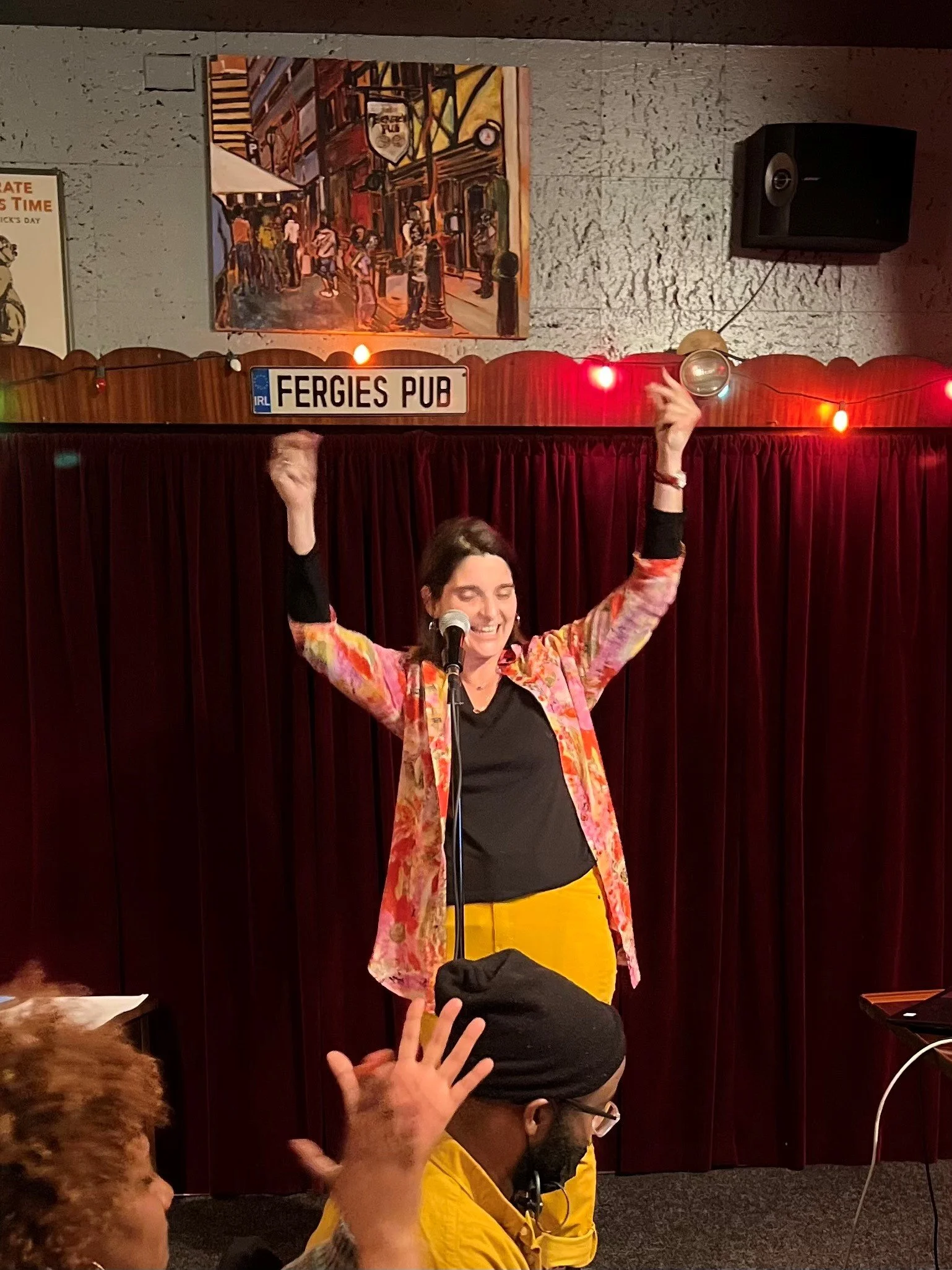
Lucia Herrmann is an artist and educator from Miami, Florida. She has lived in Philadelphia since 2014 and is heading to the University of California San Diego to join their MFA program in the fall of 2022. Lucia feels most alive when performing. In 2019, she was featured in two Philly FringeArts productions and has been in countless comedy shows, poetry readings, and open mics. She is dedicated to teaching, empowering, and uplifting individuals and communities through decolonized and anti-racist pedagogy and creative practice. Find her online or in the nearest green space.
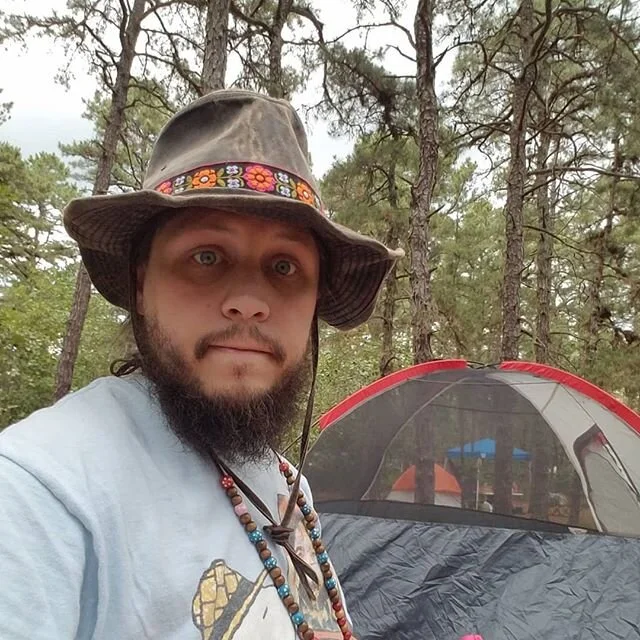
John Wojtowicz grew up working on his family’s azalea and rhododendron nursery in the backwoods of what Ginsberg dubbed “nowhere Zen New Jersey.” Currently, he works as a licensed clinical social worker and adjunct professor. He has been featured on Rowan University’s Writer’s Roundtable on 89.7 WGLS-FM and several of his poems were chosen to be exhibited in Princeton University's 2021 Unique Minds: Creative Voices art show at the Lewis Center for the Arts. He has been nominated 3x for a Pushcart Prize and serves as the Local Lyrics contributor for The Mad Poets Society Blog. His debut chapbook Roadside Oddities: A Poetic Guide to American Oddities was released in early 2022 and can be purchased at www.johnwojtowicz.com. John lives with his wife and two children in Upper Deerfield, NJ.
