
FOUND IN TRANSLATION
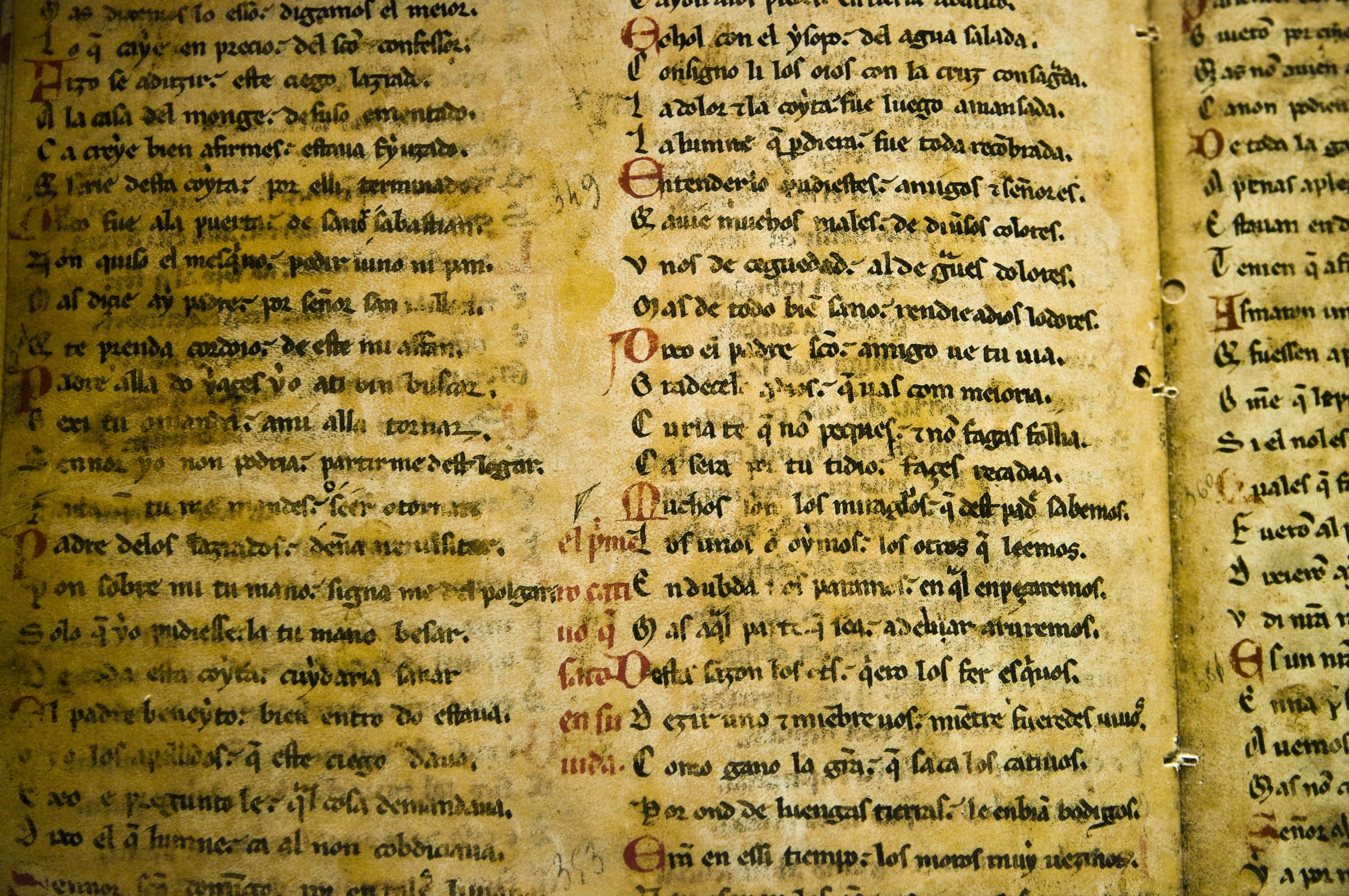
I’m excited to get to write for Mad Poets about poetry in translation. If you’ve attended a lot of the First Wednesday readings at the Community Arts Center in Wallingford, you’ll have noticed that translators of poetry (often also poets themselves) present their work from time to time. It’s a task that fascinates me: the verbal texture of a poem is so important, but every language has its own, even languages as close as French and Spanish, or German and Dutch. Every language has things it does better than any other, and you can bet those things wind up in poems. How then can a translator bring the poem into a new language, keeping it a poem instead of a prose retelling?
And yet poetry has exerted huge influence through translation, from Classical Greek or Latin shaping the writing of the Renaissance—or Italian sonnets spurring Elizabethan writing—to the very spare form of haiku flowering in other languages, including American English. Look closely at any big literary movement, and you’ll find translation at its roots.
Miltos Sachtouris, Poems (1945-1971), translated from the Greek by Karen Emmerich (Brooklyn, NY: Archipelago Books, 2006).
I’ve praised the beautiful editions of poetry translations from the publisher Archipelago before, and when I saw this edition—new to me, though published in 2006—I knew I had to pick it up and review it for the Mad Poets Blog. Author Miltos Sachtouris (1919-2005) is a Greek poet I had never heard of, though he was much recognized with prizes in his lifetime. One blurb on the pack cover lists the “Pleiades of modern Greek poets” to whom Sachtouris should be added: Cavafy, Elytis, Gatsos, Ritsos, Seferis, and Sikelianos. I note that according to Microsoft Word only Cavafy and Elytis are familiar names; the others provoke that jagged red “error” underline. Sachtouris (I think that “ch” should sound like a German or Scots “ch”) was born and died in Athens—the same year as Robert Duncan, Laurence Ferlinghetti, May Swenson, for a bit of context.
The book includes poems from multiple collections (from 1945, 1948, 1952, 1956, 1958, 1960 1962, 1964, 1971)—you can see how productive Sachtouris was. It translates the original Ποιήματα 1945-1981, which was published in 1978 and has gone through a bunch of editions since. Sachtouris continued writing and publishing new stuff, too, but people seem to agree that his best and most influential work was included in the 1978 volume. The poems’ titles are mostly simple words or phrases (“Beauty,” “The Gifts,” “October”); some are more suggestive (“The Fish of Horror,” “Rehearsals for the Repetition of Night,” “A World Came Down Springlike and Strange”), and a few draw on the Greek context (“Pasiphae,” “The Metamorphosis”).
The translator of this volume, Karen Emmerich, is a poet herself and also a professor of Comparative Literature at Princeton University, specializing in English, Greek and Turkish. Istanbul was actually the cradle of the discipline of Comparative Literature, as erudite scholars fled there from Nazi Germany and other difficult parts of 20th-century Europe. Some of those early comparatists knew a stunning variety of languages, but now that readers have become aware of the poetic riches in all parts of the world it’s clear that no one can know all the languages you would need to read every important poet in the original. So good translation is important for scholars as well as for reading poetry for pleasure and for spiritual uplift—and Dr. Emmerich is an ace. She has translated a lot of Greek poetry—eleven volumes of it since this 2006 collection of Sachtouris appeared.
All right: the book is beautiful, as always with Archipelago. Unlike many books of translated poetry, it gives the poems only in English—without the original Greek. That’s too bad, because when you look at a language with an alphabet you can usually tell if the original rhymes. None of these poems rhyme, but they’re still lovely. Sachtouris’s work has a touch of surrealism, hardly any punctuation and only occasional capitalization, altogether a very modern feeling, and lots of darkness. The dates in the title cover all kinds of bitter moments in Greek history: WWII, civil war, juntas and dictatorships. The vocabulary includes lots of color, in particular lots of “blood” or “bloodied”—including the poet himself, and his parts. By the time Sachtouris published the final collection from which this volume was drawn, he was in his 50s but hadn’t yet gotten staid or boring.
The Sky
Birds black arrows of difficult sorrow
it’s no easy thing to love the sky
you’ve learned well to say that it’s blue
but do you know its caves its forests its rocks?
so as you pass like winged whistles
your flesh gets torn on its glass
your downy feathers stick to its heart
And when night creeps fearfully from the trees
you gaze at the white kerchief of the moon
the naked virgin shrieking in the sky’s embrace
the old woman’s mouth of rotting teeth
the stars with their swords and golden threads
the sky’s lightning its thunder its rain
the distant bliss of its galaxy (p. 48)
This early poem has striking images; the lack of punctuation makes the reader decide where to pause the stream of words. Emmerich has a wonderful ear for sound: the i and s sounds in “the distant bliss of its galaxy” seem to shift away from all the earthly details that came just before: shrieking virgins, old women’s rotting teeth, and stars that combine (masculine?) warlikeness and (feminine?) beauty or craft (the golden threads).
Some of the poems feature unexpected treatments of familiar characters:
The Sheep
My head full of dreams
my hands full of mud
Shall I too sing of the rain
when Pontius Pilate went out into the streets
no one recognized his face
in the darkness in the desert by the wires
when Jesus multiplied the fish
one man was leaning on a fence
another on a blind bridge
another on a crumbling house
when Jesus multiplied the fish
and the sea unleashed onto the land
her wild white sheep
Pontius Pilate went out into the streets
but no one recognized his joy
Pontus Pilate first mate of the river
with his cage his hungry birds
his garden his lost flowers
the two embraced on the hill
the two sighed in the arcade
the two swooned under the cypress tree
as the sea gathered up again
her wild white sheep
to lull them to sleep in her bitter embrace (p. 77)
Here the title does interesting work: a reader today might expect sheep to meant people deluded and misled; once Pontius Pilate and Jesus enter, it seems the sheep must be from a religious flock. But then it turns out to be the sea who releases the wild white sheep: a flood, with whitecaps on waves? The sea is feminine in Greek (thalasa), and the phrase “her bitter embrace” might remind us (given the religious figures in the poem) that “bitter” is the etymological meaning of “Mary.” So who knows how it is all connected. Like many of the poems, this one has lines that send the reader in unexpected directions: I suspect that the book as a whole would be excellent at stirring poetic inspiration in its readers.
There is also some effective ambiguity in the translations. In “Love slipped through your fingers” (p. 96), the last four lines are:
full
of shadows
of songs
of birds
—Does this mean “full of shadows, full of songs, full of birds” or “full of shadows of birds’ songs,” or some combination of these?
Sachtouris has occasional prose poems too, which are more traditionally punctuated:
On the Old Road
H.N.
A beast ate my darling. We had gone out for a walk as always, had seen the house with the meandering motif on its walls, and it had started to sprinkle. Then a clown came out dressed in all sorts of colors turning somersaults and laughing in the street and he wasn’t even asking for money. A little farther down a man was playing the violin while gazing up at some strange red clouds in the sky.
And when the rain grew stronger it formed lots of little streams that washed the blood away. (p. 148)
Emmerich avoids making the rhythm too pretty when it shouldn’t be: see from “The Mirror” (p. 160):
gleaming
and glowing
as the fire took it and made it
coal
the head whispered:
— The trees are burning leaving like hair
the angel flies off with scorched
wings
white pain
a dog with a broken leg
remains
remains
In the line(s) “an angel flies off with scorched/wings,” “scorched” has to be stressed because “off” and “with” can’t be, so the adjacent stresses of “scorched” and “wings” (a spondee, if we read “wings” as part of the same line), create a sort of painful effect, especially because the word “scorched” is so complex to pronounce.
Emmerich provides a brief afterword to the book—nice for a reader who doesn’t want to feel lectured to in starting a book, or who will feel guilty if they skip an introduction—especially since Sachtouris is not yet a Recognized Classic you’d approach as required reading. The afterword confirms the element of surrealism in his work and mentions a few of his Greek surrealist poet friends. (He also has a poem to Apollinaire, and one to Dylan Thomas.) Describing the challenges of her work, she writes, “In poem after poem, Sachtouris exploits ambiguities in the Greek language to confound subjects and objects, enabling multiple, often conflicting readings of particular poems. I have tried, wherever possible, to retain the oddness of Sachtouris’s syntax and the grammatical openness of his phrases” (p. 234). Indeed!
I need to cite just a few more:
The Inspector
The sky is a garden full
of blood
and a little snow
I tightened my ropes
once more I must inspect
the stars
I
heir of birds
must
though with broken wings
take flight (p. 125)
Sachtouris’s tactic of placing just a word or two beneath and almost at the end of a longer line, and of including very short lines, slows down the poems while leaving plenty of white space. In the next one it almost looks like two stanzas:
The Grave’s Bird Was Leaving
The grave’s bird was leaving
so small
red as mourning
vanishing
tenderly
over the sparse grass
with the eternal turtle and its silent
tread
the dead locust
and the bee
that had lodged itself
painfully
in the flower’s mouth (p. 183)
And a more surrealistic example:
We See With Our Teeth
The moon isn’t to blame for our bitterness
as it whirls furiously
in the phosphorescence
scattering its bones left and right
the moon isn’t to blame for the lemon blossoms
the moon isn’t to blame for the swallows
the moon isn’t to blame for Spring and the
crosses
or that teeth sprouted from our eyes (p. 201)
Finally, here’s one where Professor Emmerich had to pull out all the stops (…Microsoft Word went crazy with red underlines):
Zacchaeus
They named you well: Zacchaeus!
he said high up falling from the tree
holding a yellow flag
the motorcyclobicyclist
the hematocyclobicyclist
the motorcycollectogivetaker
the metelashster
the hemateyelockster
the motorcyclobicyclomarksman
the bandit
the bloodying (p. 219)
When I googled a bit, I discovered that many of the Sachtouris poems you might find online were translated by Karen Emmerich, and that this book was a finalist for the 2007 National Book Critics Circle Award in poetry. So I’m glad I finally found Poems, and you don’t have to take my word that it’s a good book of poetry in translation.

Poet and translator Sibelan Forrester has been hosting the Mad Poets Society's First Wednesday reading series since 2016. She has published translations of fiction, poetry and scholarly prose from Croatian, Russian and Serbian, and has co-translated poetry from Ukrainian; books include a selection of fairy tales about Baba Yaga and a bilingual edition of poetry by Serbian poet Marija Knezevic. She is fascinated by the way translation follows the inspirational paths of the original work. Her own book of poems, Second Hand Fates, was published by Parnilis Media. In her day job, she teaches at Swarthmore College.
