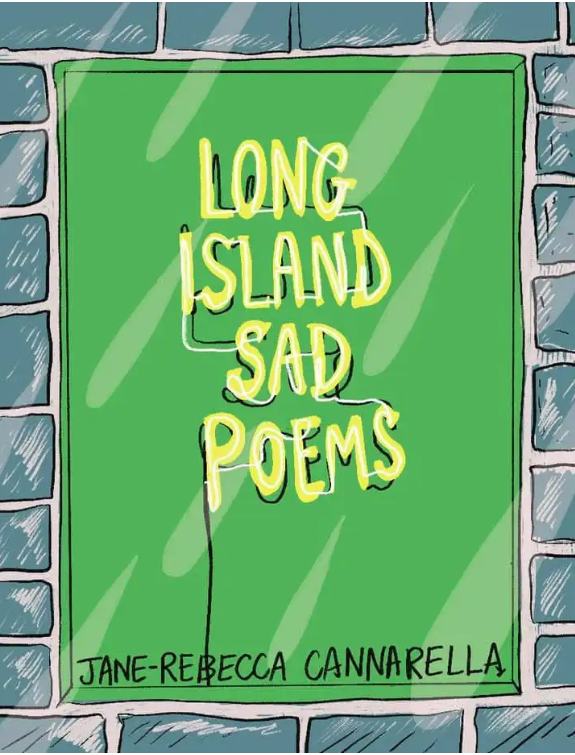
Long Island Sad Poems
Serotonin Press
$12.95
You can purchase your copy here.
Reviewed by Sean Hanrahan
The fact that industrious poet and literary citizen, Jane-Rebecca Cannarella, has a new poetry collection out titled Long Island Sad Poems is great news for fans of her poetry. And, to be quite frank, everyone should be fans of her poetry. It is surreal yet relatable, heartbreakingly sad while at the same time defiantly funny. In other words, her poems are an open rather than a closed door. This title is a non-classifiable, emotional, culinary fantasia that I will endeavor to do justice to in my words below.
Many of these poems in this book either take place during or reflect back on the narrator’s seemingly endless Long Island summers where she begins to learn about life—the agonies and the ecstasies, if you will allow me to quote one of my favorite novels. The first poem, “Boulder” discusses those formative moments of isolation that children often experience, and how that solitude can help to create a creativity as formidable as Cannarella’s:
The building of a boulder half covered
at high tide, I remembered how the cool
kids would climb them, and I see
the scrambling of their bodies
as they reach the top to seat themselves:
tangled hair kings in my memory.
You can feel the longing to become part of the cool kids, but also a longing to be separate from them. In this poem, you start to become one with the beach as the narrator becomes one with the boulder. Cannarella ends this exquisite poem with the lines: “I saw myself not just watching the Sound/while standing on the brick backs of red rocks/but becoming the boulder.”
Loss is a throughline in this collection, suggested by the title. This loss concerns not just actual people who have died, but also a loss of innocence and the child’s love of the self. In “The Jelly Inside Doughnuts,” Cannarella touches upon on these losses:
This Easter, my dad got doughnuts
and told me Pop’s favorite was jelly—
gone forever ago.
Time stretches backwards
with a gemstone, the ingredient of travel—
an archaeologist’s discovery
of my favorite person,
somewhere resting in a field I’ve never been.
It takes a poet of Cannarella’s sensitivity to use food, literally as a time machine, to take you back to those dearly departed loved ones. Memories of her Pop and her former childhood self occur as the poem ends with “My cheeks are a child’s again,/covered with jam.” As I grow further into middle age, I learn few things connect you with more people, past or present, than food.
As indicated in the previous paragraph, food is as important to this collection as it is important to human connection. How often do we bond with each other over favorite foods, recipes, and restaurants? One poem where food serves as the invitation to the reader is “In the Absence of Sugar, We Used Syrup.” For so many of us when we are starting out in our twenties our diets are often limited by our funds. In this poem, the narrator and her roommate, Cassie,
lived in the red-wine-stained
apartment, alongside a jug of Carlo Rossi,
a VCR, cans of Campbell’s soup,
and a white fridge filled with old food
from the previous tenant.
Cassie and the narrator “grabbed what we could from/sad jobs” since “Necessity makes choices for you.” The “dusty groceries” were indeed “treasures found before cabinet cleanouts.” I think there are very few people who could not relate to this poem and its celebration of the bittersweet serendipity that can be found even with sad jobs or low funds. Like any great poet, Cannarella telescopes out from one such treasure “a bottle of Vermont maple syrup,/was our substitute for sweetness” to
Loss comes with adulthood—a lack
of sugar, security, my grandfather,
I looked at my hands, and at Cassie’s,
warmed by secondhand mugs,
and even within the absence, I saw God.
There are several moments, several verses, where you get an approximate of God, or at least otherworldly versifying, in Cannarella’s Long Island Sad Poems. Of course, many of the poems are sad, but in that conversely uplifting way. Cannarella shares the narrator’s sadness to forge connection with people, to make them feel they are not alone. In an era where poetry can often feel mysterious or indecipherable or overly solipsistic, I find it refreshing to read Jane-Rebecca Cannarella’s poems as an invitation to life experience, a hand holding as you rediscover your own joys and losses, your own friendships and solitudes. Perhaps, Cannarella shares the most warm and welcoming invitation of all, a shared feast of words.
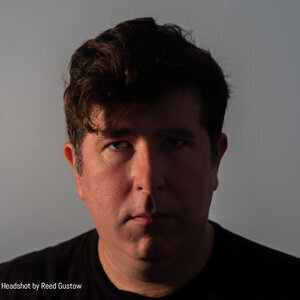
Sean Hanrahan is a Philadelphian poet originally hailing from Dale City, Virginia. He is the author of the full-length collection Safer Behind Popcorn (2019 Cajun Mutt Press) and the chapbooks Hardened Eyes on the Scan (2018 Moonstone Press) and Gay Cake (2020 Toho). His work has also been included in several anthologies, including Moonstone Featured Poets, Queer Around the World, and Stonewall’s Legacy, and several journals, including Impossible Archetype, Mobius, Peculiar, Poetica Review, and Voicemail Poems. He has taught classes titled A Chapbook in 49 Days and Ekphrastic Poetry and hosted poetry events throughout Philadelphia.
