Human Rights: Elegies for Victims of State-Sponsored Violence
Moonstone Press
$20.00
You can purchase your copy here.
Reviewed by Sean Hanrahan
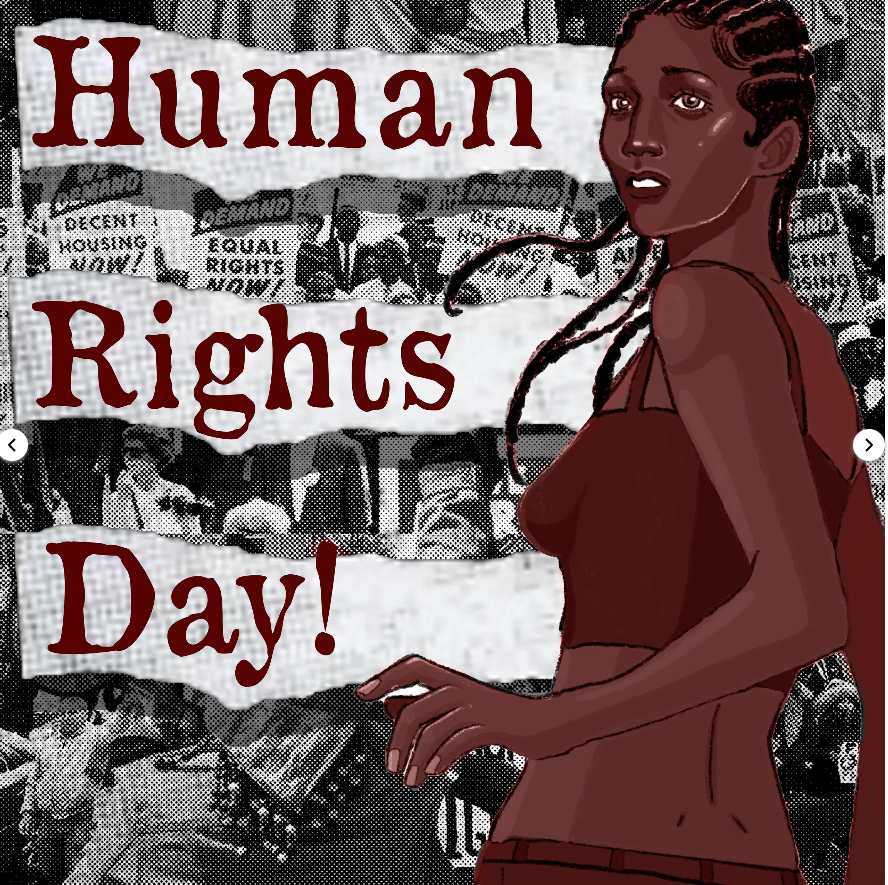
The collection, Human Rights: Elegies for Victims of State-Sponsored Violence, skillfully curated by editor, Helen Zeidman, is not easy reading, but rather essential reading. It is strident; it pulls no punches. True to Moonstone ethos, this collection calls from poets from all backgrounds, experiences, and geographic locations to respond to the open-ended prompt: Human Rights Day 2024. From the website, “Seventy-five years ago, the United Nations adopted the Universal Declaration of Human Rights that declares ‘all human beings are born free and equal in dignity and rights.’” As my wont when reviewing other anthologies, I will refrain from reviewing anyone I know personally from the poetry community. Please note this collection thoughtfully examines state-sponsored violence and its devastating impact. I thought it was important to review, but I want to make sure people reading this review are aware of its content.
Although many of these poems refer to US government-sponsored violence, some of these poems focus on human rights violations in other parts of the world, including the succinct, powerful poem, titled “Felani Khutan was left on a fence by the India-Bangladesh Border Police for 5 hours before her body was taken down and returned to her family” by Sonia Aggaral. The stark poem begins
Her legs wrapped in blue pants, splayed
across barbed wire and raw
wood for hours with her head hanging
below her,
The words are direct, simple perhaps but graphic. This poem gives the reader a lucid glimpse into the horror of the violence enacted against Felani. She “looks back” to where the “wildflowers grow.” The wildflowers are “picked…by children/and brought to parents, who hide/ the newspaper.” The poem ends hauntingly with “this girl, bride to be…waiting to be released/ from metal and caught, shot/ left to grow stiff with the night.”
This volume contains several poems examining the horrifying situation of police violence against Black people in the United States. These poems demand our attention. Two poems that I want to highlight nclude “Trix” by Sam Hendrian and “#autismawareness” by Aurora McKee. “Trix” uses a strong narrative and a rhyme scheme to illustrate the unjustness of policing of Black men in particular. The man
Got through the self-checkout
with relative ease;
threw the receipt right out,
was too stressed to track fees.
He is stopped by two policemen who assumed he did not pay.
Demanded he show proof;
that he hadn’t stolen anything;
he hoped it was a spoof
of a pre-60s sort of thing.
The situation escalates and sadly deteriorates into violence: “put a bullet through his face.” Hendrian ends the poem
The Trix fell out of the bag
alongside a junior hair comb
while his family’s eyes started to sag;
how late would he be coming home?
“#autism awareness” was written in remembrance of the police shooting of Charles Kinsey, a behavioral therapist who was assisting a patient:
There’s a rainbow police van on the streets of miami
bright colors like the free candy strangers offer, tempting
mouthwatering, adorned with puzzle pieces, offering
neatness, order, a solution, #autism awareness…”
McKee counters, “did you think we’d forgotten?/ the Black social worker shot besides his autistic patient.” The poem continues in tightly wound stanzas about to unwind and explode with righteous anger: “gunfire the only stim allowed around/ here…precious autistic bodies,/ precious disabled bodies, precious Black bodies.” This poem encapsulates the rage many Americans experience and the duplicity often inherent in law enforcement who are there to protect the peace.
The last poem I will explore examines the situation for LGBTQ people in the United States. “Firestarters” by Ace Howlen is a whirlwind of LGBT political history from
There were Ariston, Baker Street, and Turkish Baths:
those private/public bathhouses at the century’s turn,
where men could be men (or women) until the Scare,
a legal campaign claiming all gays were insane.
The internal rhyme continues with the lines “Deemed deviants and perverts, both politician and police/ incite/inspire suppression, crushing without question. I think for this collection I would like to have the final word. I do want to recommend this collection. It is stirring and necessary in these times. I hope Human Rights: Elegies for Victims of State-Sponsored Violence inspires us all of us you can to fight on, and like so many poems in this collection, “Firestarter” ends in a helpful and necessary defiance:
So when we outline their bodies in chalk
we dance a fury, chanting their names
before igniting the flames, light them so
bright neither police nor priest can escape
our thoughts and prayers.
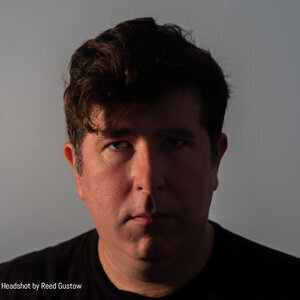
Sean Hanrahan is a Philadelphian poet originally hailing from Dale City, Virginia. He is the author of the full-length collection Safer Behind Popcorn (2019 Cajun Mutt Press) and the chapbooks Hardened Eyes on the Scan (2018 Moonstone Press) and Gay Cake (2020 Toho). His work has also been included in several anthologies, including Moonstone Featured Poets, Queer Around the World, and Stonewall’s Legacy, and several journals, including Impossible Archetype, Mobius, Peculiar, Poetica Review, and Voicemail Poems. He has taught classes titled A Chapbook in 49 Days and Ekphrastic Poetry and hosted poetry events throughout Philadelphia.