New Girl in Town
by Catherine Doty
Cross the street, Franny, if ever you spy
Joe Moe, whose hand-hewn tar paper
shack we approach on bets, or pitch chunks
of pudding stone at from moving cars.
You’ll want, too, to skirt Donna’s Uncles,
Drunk and Jolly, who’ll sneak through
your screen door with snow cones and try
to kiss you, and Ronnie Vee, who just got out
of Rahway (we’re not supposed to know
what got him there).
And Saint Ag’s School is an iron maiden
of dangers, though statues of saints peer out
of each dusky corner, and Jesus his plaster self
tops the entrance stairs, where one day he stared
at a second-grader’s vomit, hand held before
his exposed and flaming heart, as if to express
distaste for incarnation. Expect more shame
to be handed out than blessings, administered lavishly
both in word and deed: for girls, eighteen inches
of steel on open palms, for boys, once slung across
a nun’s black lap, lusty whacks on the seats
of their regulation pants.
So, that’s about it, Fran, except for that candy store
where the old guy gives out wax lips for Halloween,
and ends of cold cuts to the dogs he lets inside.
He’ll say, Sweetheart, you look pale, are you on the rag?
If you’re hungry, Franny, tell him yes. He’ll put his hand
on your stomach, and then on your forehead, then tell
you you’re clammy, then toast you a piece of toast.

How does a poem begin for you? Do you have any sort of process?
My poems begin when an experience, phrase or image intrigues me. When I recognize that desire to get to work I feel that the poem somehow already exists within me, though only hours of questioning, of writing and rewriting, of wandering every corridor of meaning, of experimenting with image and language and sound, of weighing, finally, the worth of each word, will, with luck, result in a piece of writing that is surprising, powerful, universal in its truth, and, I hope, thrilling to read.
I think humor is one of the most difficult poetic tools to effectively utilize and your poems often successfully use humor in tandem with darker themes. Do you have any advice for poets trying to utilize humor in their poems?
It’s going to be a whole lot easier if you’re a funny person. Like simile and metaphor, humor is something fundamental and intrinsic that informs a piece as it is develops, rather than something attached or added to a finished work. Also, humor in poetry ranges from the slyest, most subtle irony to flat-out slapstick. Since I often write from a child’s viewpoint, and children commonly see humor in what is tragic or too mysterious to make sense, so the dark and the funny do tend to hang out together in much of my work.
The term stand-up tragedy has been suggested to describe the business of poetry, and it is true that many of the earmarks and techniques of stand-up comedy are found there, including timing, specificity, hyperbole, sound, tone, and, most importantly, surprise. Finally, a sense of humor is an element that can be deepened and developed, though not taught.
Does your work with cartoons seep into your poetry?
I don’t find that my cartooning affects my poetry or vice-versa. The two disciplines share some fundaments—for example, successful cartoons and poems both derive strength from what is left out, that estuary between what one supplies to the reader and how the reader’s life experience affects it. Imagery, of course, is vital to both. It’s my intention that my cartoons perform as wordless stories, and that the imagery in my poems be more sensory and powerful than any illustration.
Your new collection, Wonderama, was released this past February. Your last collection, Momentum, was published in 2004. How was putting together this second collection different from assembling the first one?
Many of the pieces in my first book, Momentum, were chosen or developed from a pool of poems spanning decades. The poems in Wonderama, however, were written with a specific narrative trajectory in mind, though each is meant to stand alone as a satisfying and thoroughly realized experience.
The poems in Wonderama are grounded in place but I think even more so in exquisite details. How does memory and (possibly) altering memory play a role in crafting your work?
My memories, because they shape my view of the world, are the source of all my work, though the last thing I want to do is to place veracity over craft. No matter the depth of emotion in a poem, no matter how passionate the voice or how arresting the situation found there, literal truth is not what that makes the heart pound. Each poem is a form of propaganda, and each an exercise in manipulation. I know what I want the effect of a poem to be, and it’s cold calculation and a fierce attention to detail that get me there.
Where can readers find more of your book/buy your books?
My books can be purchased through CavanKerry Press, the University of Chicago Press, at most major retailers. Learn more at www.catherinedoty.com.

Catherine Doty is a poet, cartoonist, and educator from Paterson, New Jersey. She is the author of Wonderama and Momentum, volumes of poems from CavanKerry Press, and Just Kidding, a collection of cartoons from Avocet Press. She is the recipient of a fellowship from the National Endowment for the Arts, as well as an Academy of American Poets Prize and fellowships from The New Jersey State Council on the Arts and the New York Foundation for the Arts. She has taught poetry for many years in many, many places.
Just Kidding, Avocet Press, 1999 (cartoons)
Momentum, CavanKerry Press, 2004 (poems)
Wonderama, CavanKerry Press, 2021 (poems)
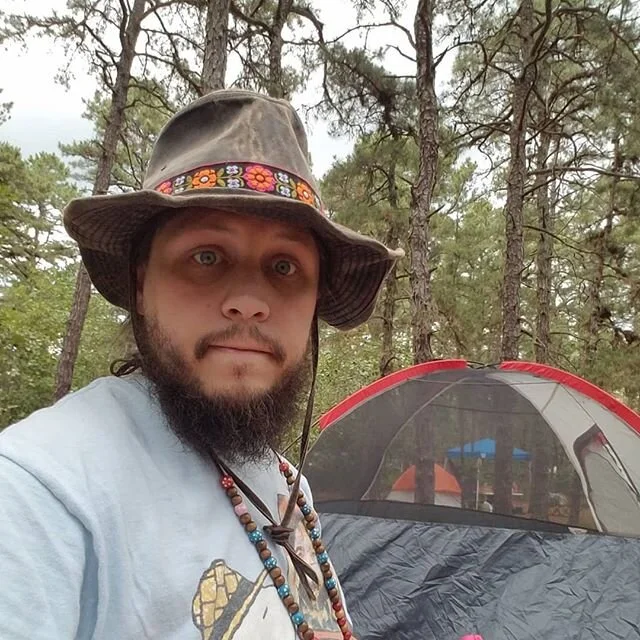
“Catfish” John Wojtowicz grew up working on his family’s azalea and rhododendron nursery in the backwoods of what Ginsberg dubbed “nowhere Zen New Jersey.” Currently, he works as a licensed social worker and adjunct professor. He has been featured in the Philadelphia based Moonstone Poetry series, West-Chester based Livin’ on Luck, Mad Poets Society, and Rowan University’s Writer’s Roundtable on 89.7 WGLS-FM. Find out more at: www.catfishjohnpoetry.com.
